Force Displacement Mechanism
Project Date
Feb 2025
Course/Company
ME104: Mechanical Design
Scope
CAD, Analysis, Inverse Analysis
Timeline
2 weeks
Tools Used
Fusion 360, Instron testing
Project Overview
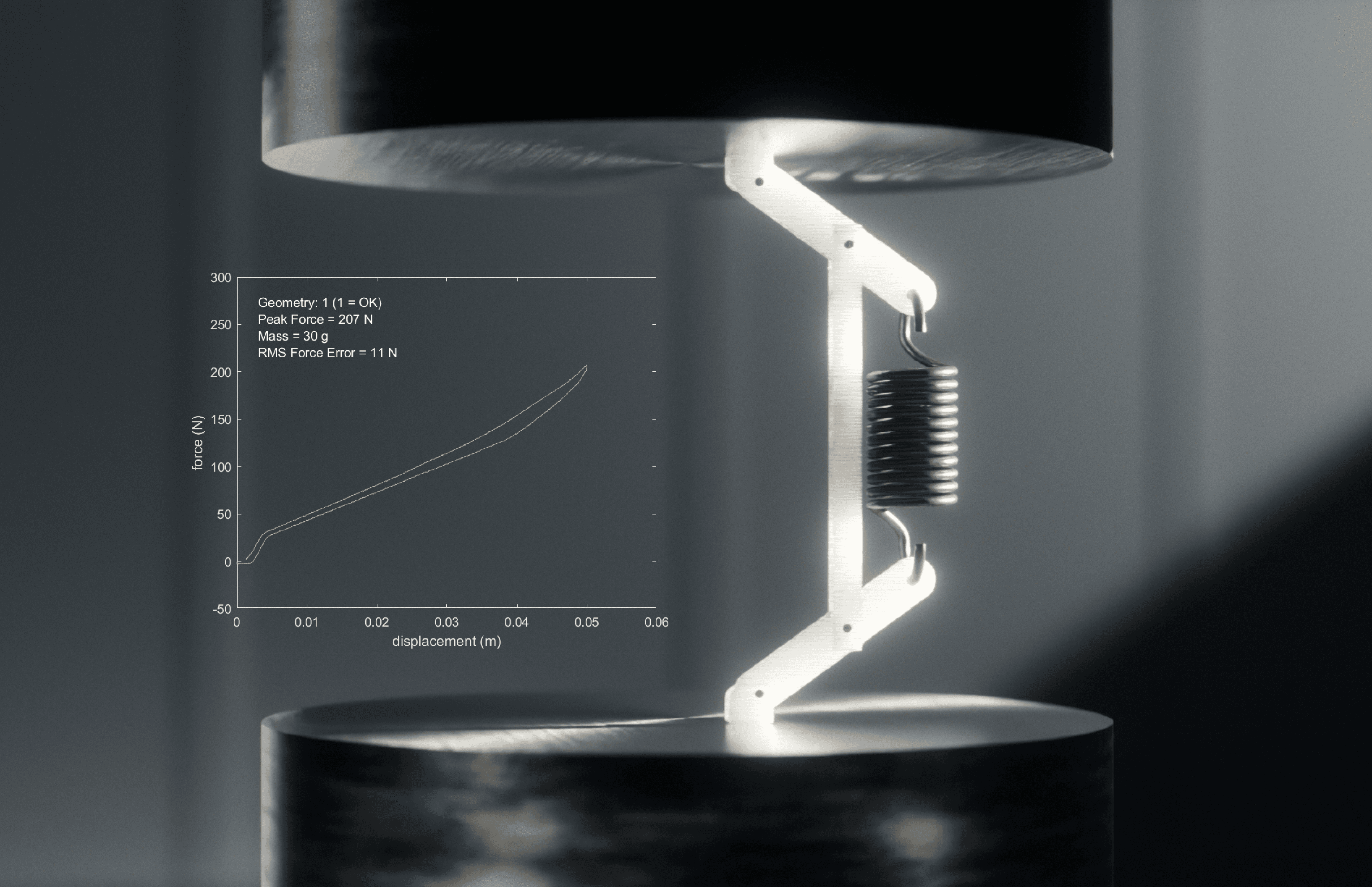
The goal of this project was to design a passive mechanism that could achieve a particular force-displacement relationship.
Our mechanism used a tension spring and optimized cross-sections and lengths to achieve the most accurate force-displacement relationship (i.e., closest to specification). Not only that, but out of all 15 mechanisms, ours was the 2nd lightest.
Problem Space Exploration
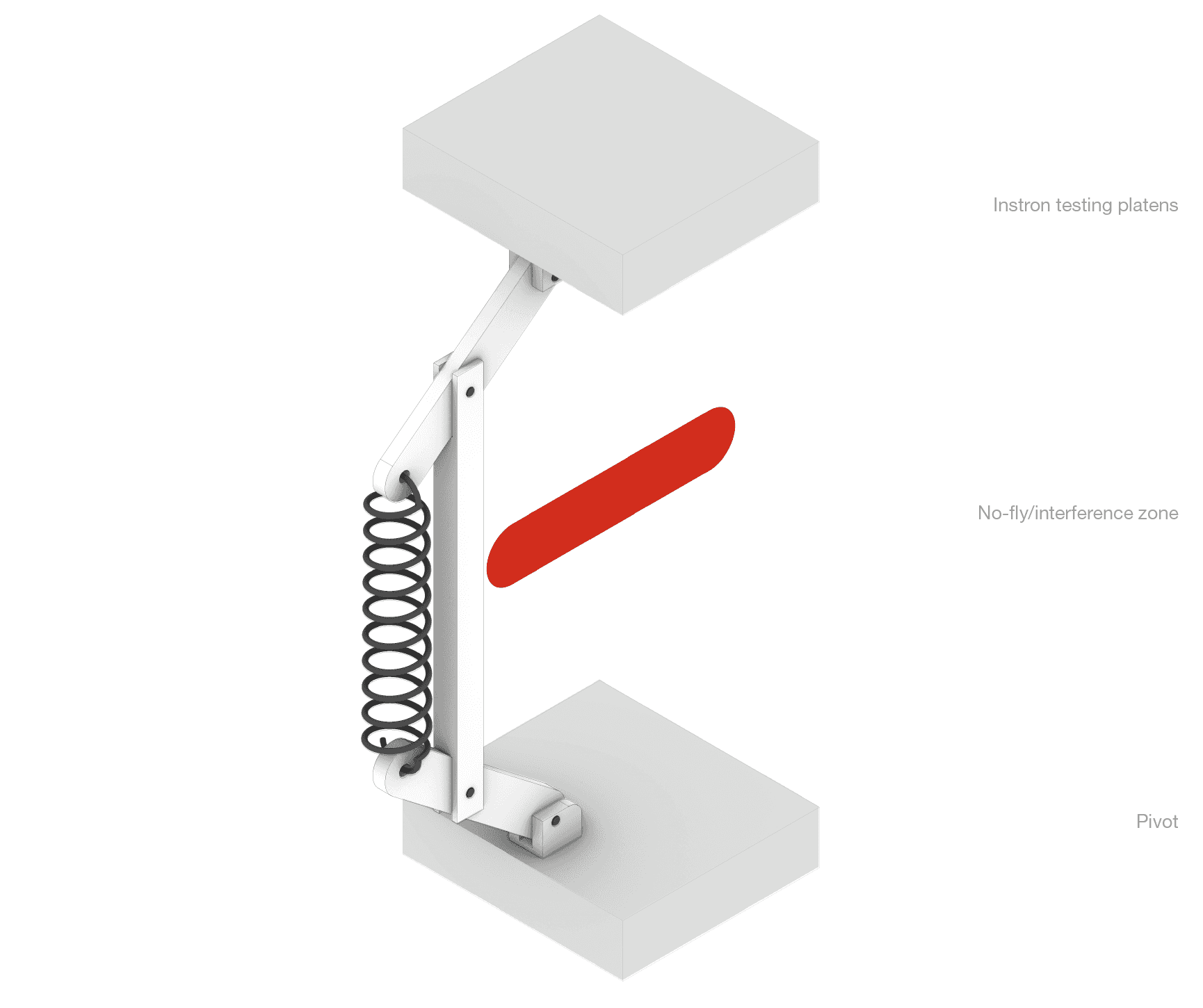
During the problem space exploration, ideating began with both compression and tensile springs in mind. Ultimately, the tensile spring was selected as it seemed to lend itself better to mass-optimized mechanisms and didn't have any buckling risk.
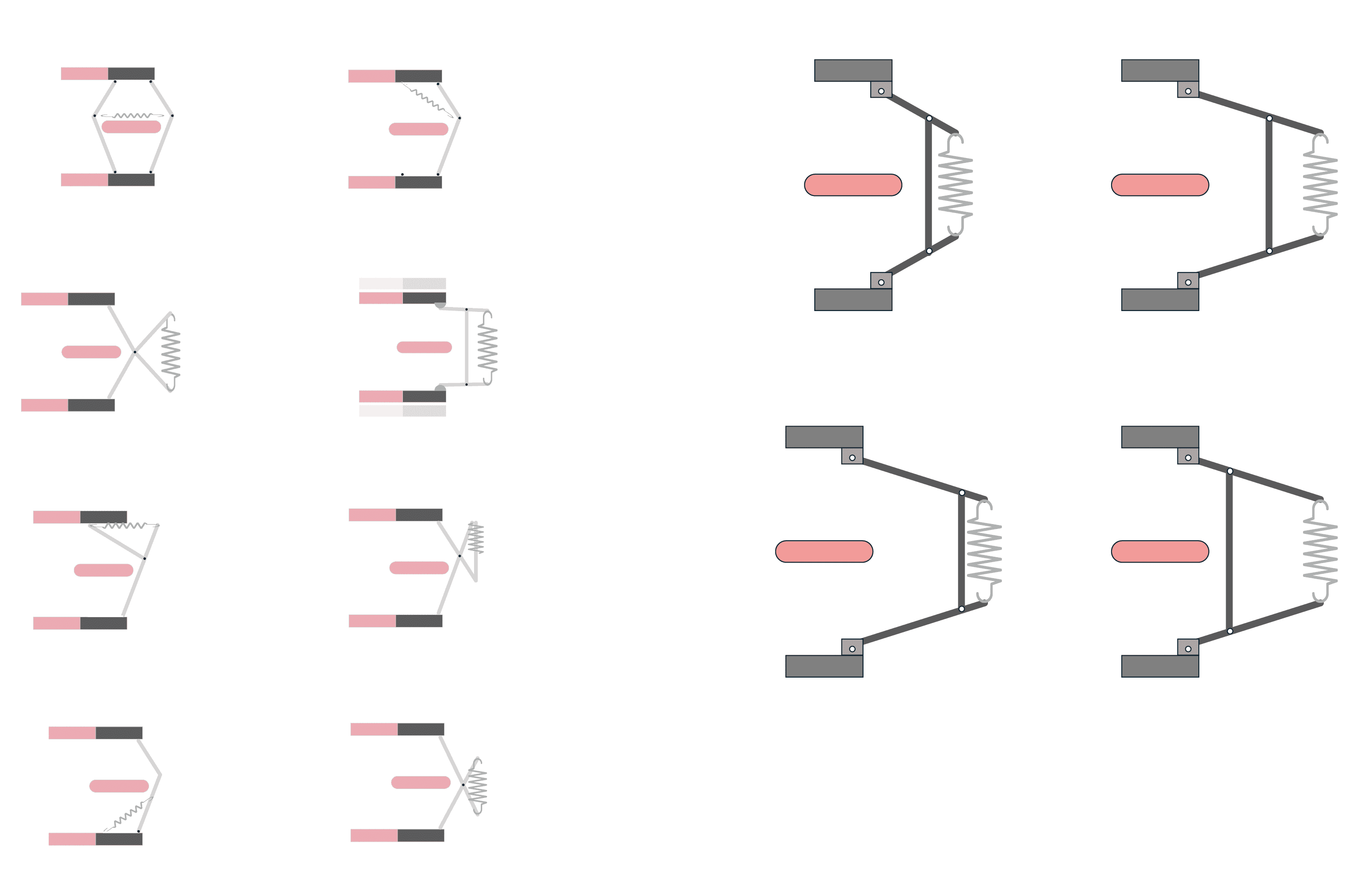
After selecting the preferred design, I thought about which dimensions we could alter in order to parameterize it.
Analysis
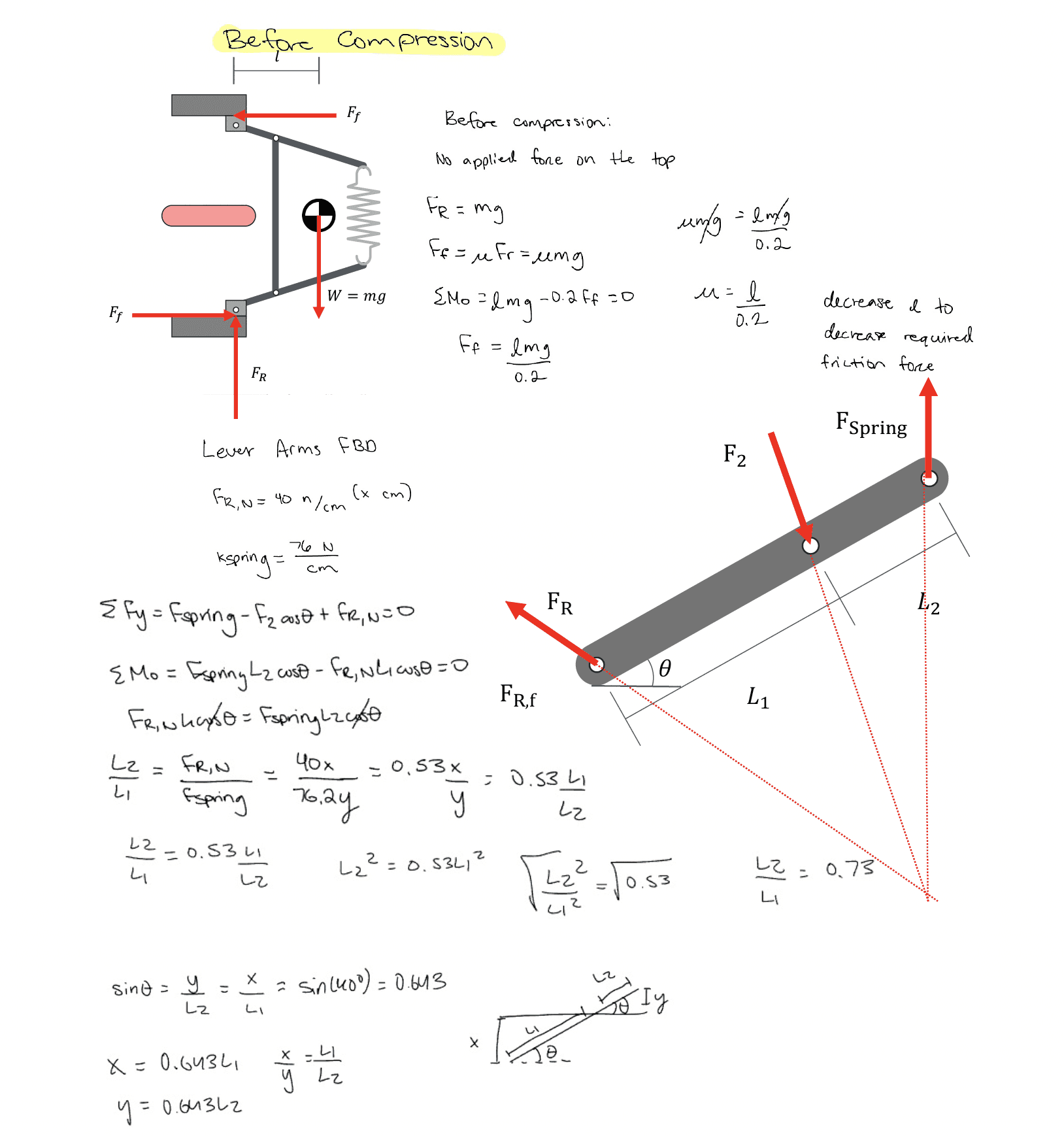
From here, hand analysis was completed to understand the basic relations between the parameters and predicted performance. This helped refine the overall mechanism before optimizing the lever arms and middle member cross-sections for the chosen material (3D-printed polycarbonate).
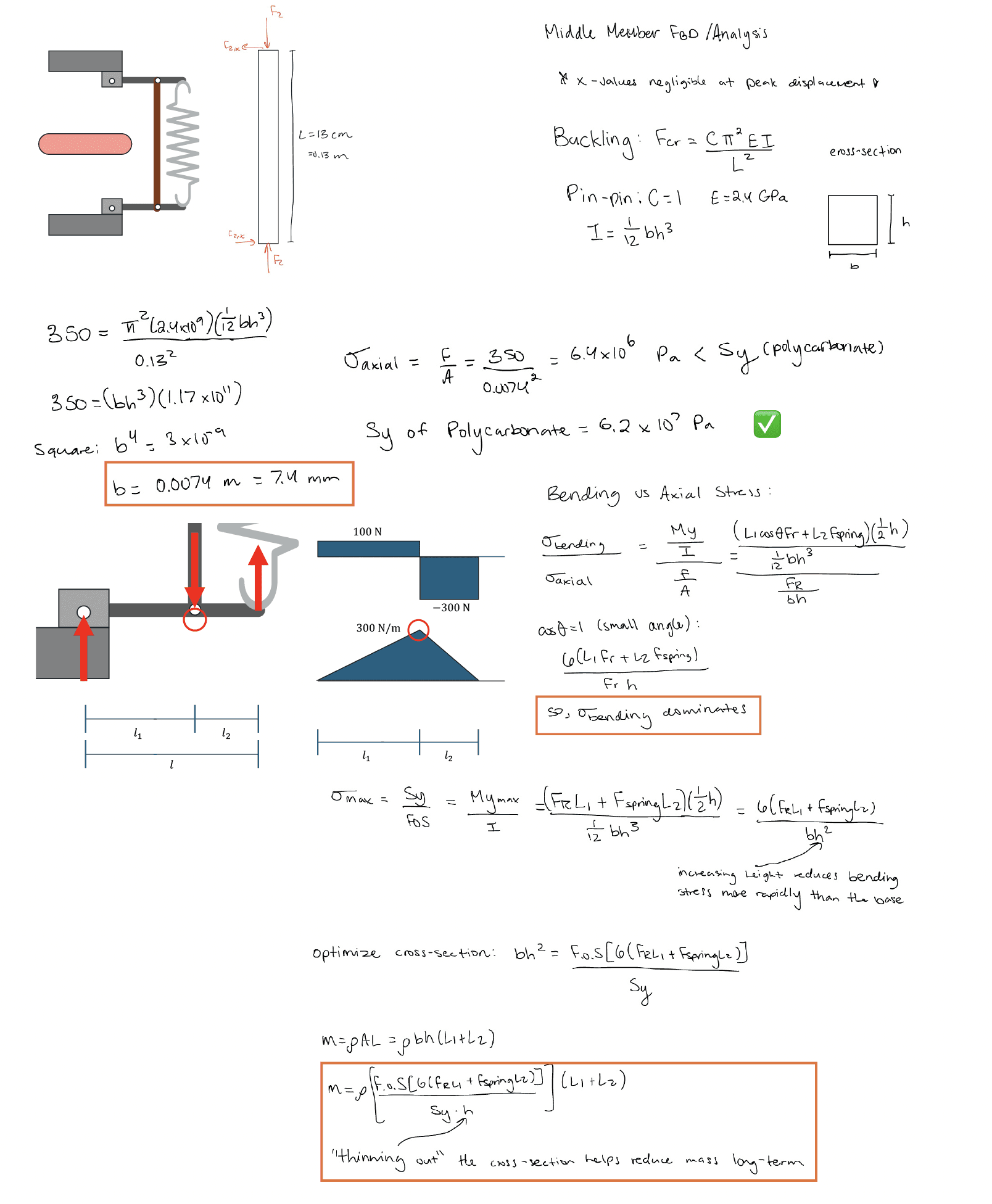
When the completed inverse failure analysis to further optimize our design and better understand the material profile we needed.
Pin & FEA Analysis
Next, I analyzed the shafts in order to choose mechanical components to act as the pin joints. I was able to find a required shaft diameter, and sourced equivalent screws.
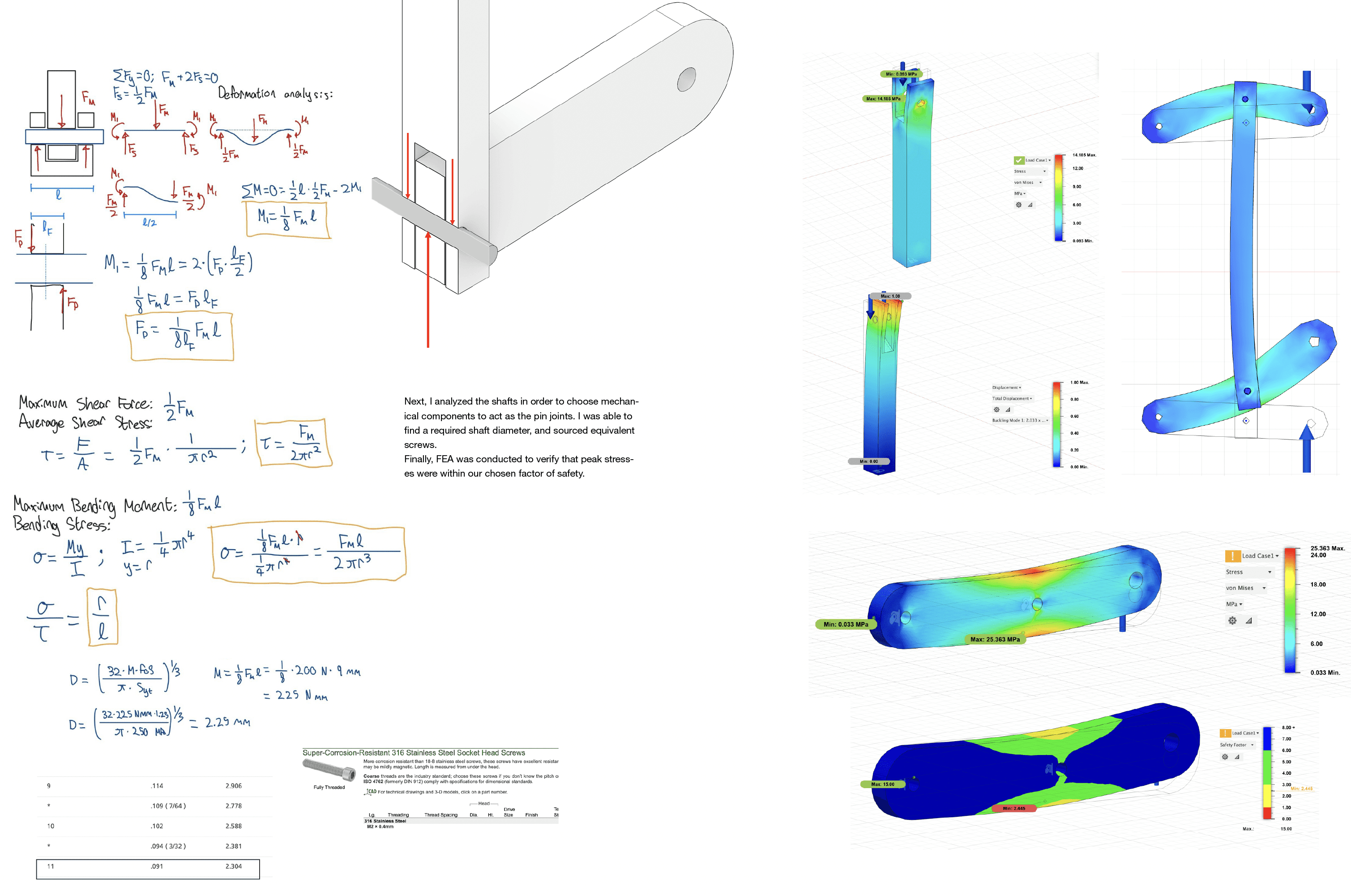
Finally, FEA was conducted to verify that peak stresses were within our chosen factor of safety.
Testing & Results
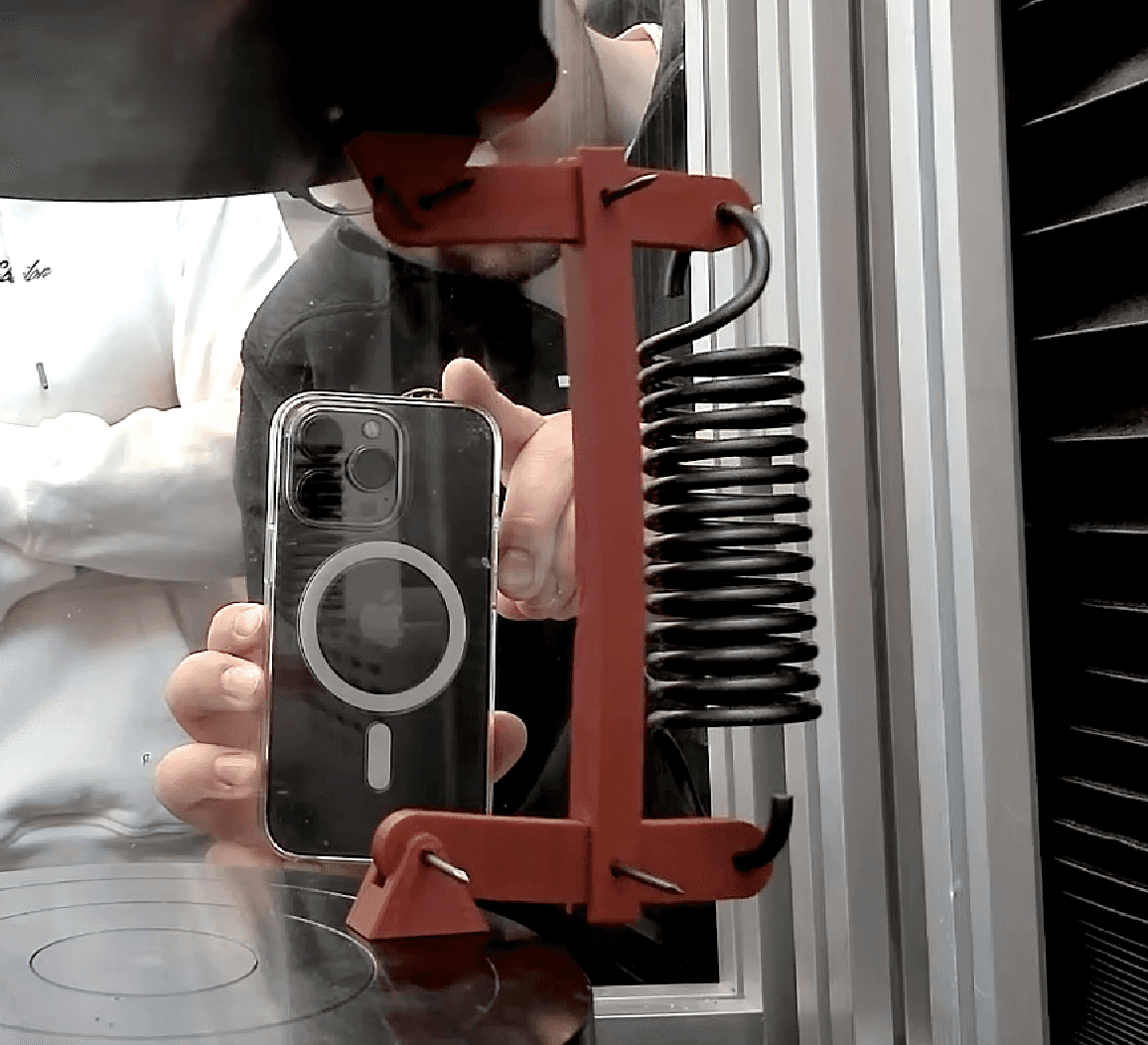
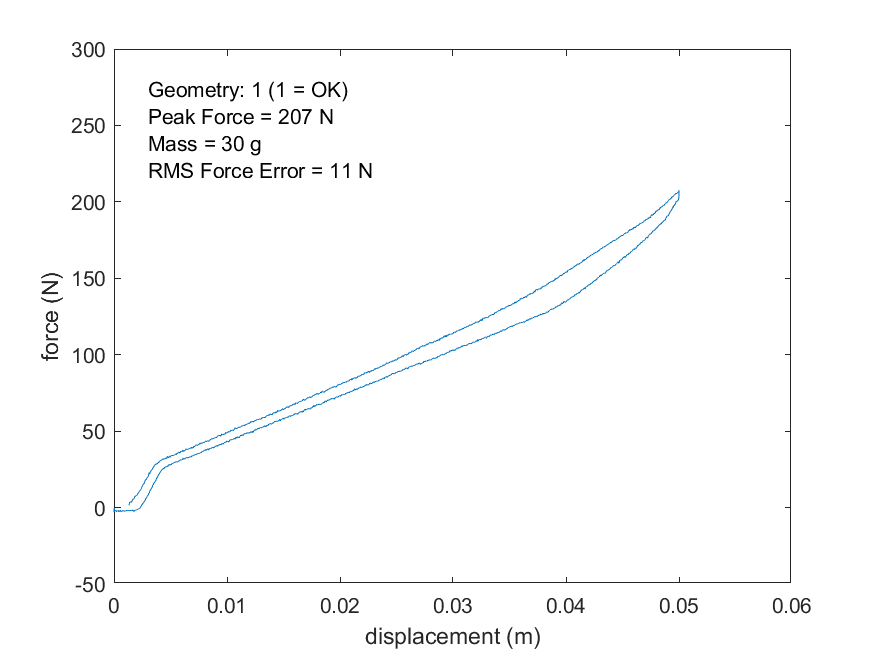
The mechanism performed very well, with a slight deviation from the desired force-displacement relationship due to deflection.
Overall, the design won "Most Accurate" for its exceptional performance, and the presentation I made won "Best Animations" for having visualized the mechanism, problem space, and mechanism parameters so well.