Haptic Platform
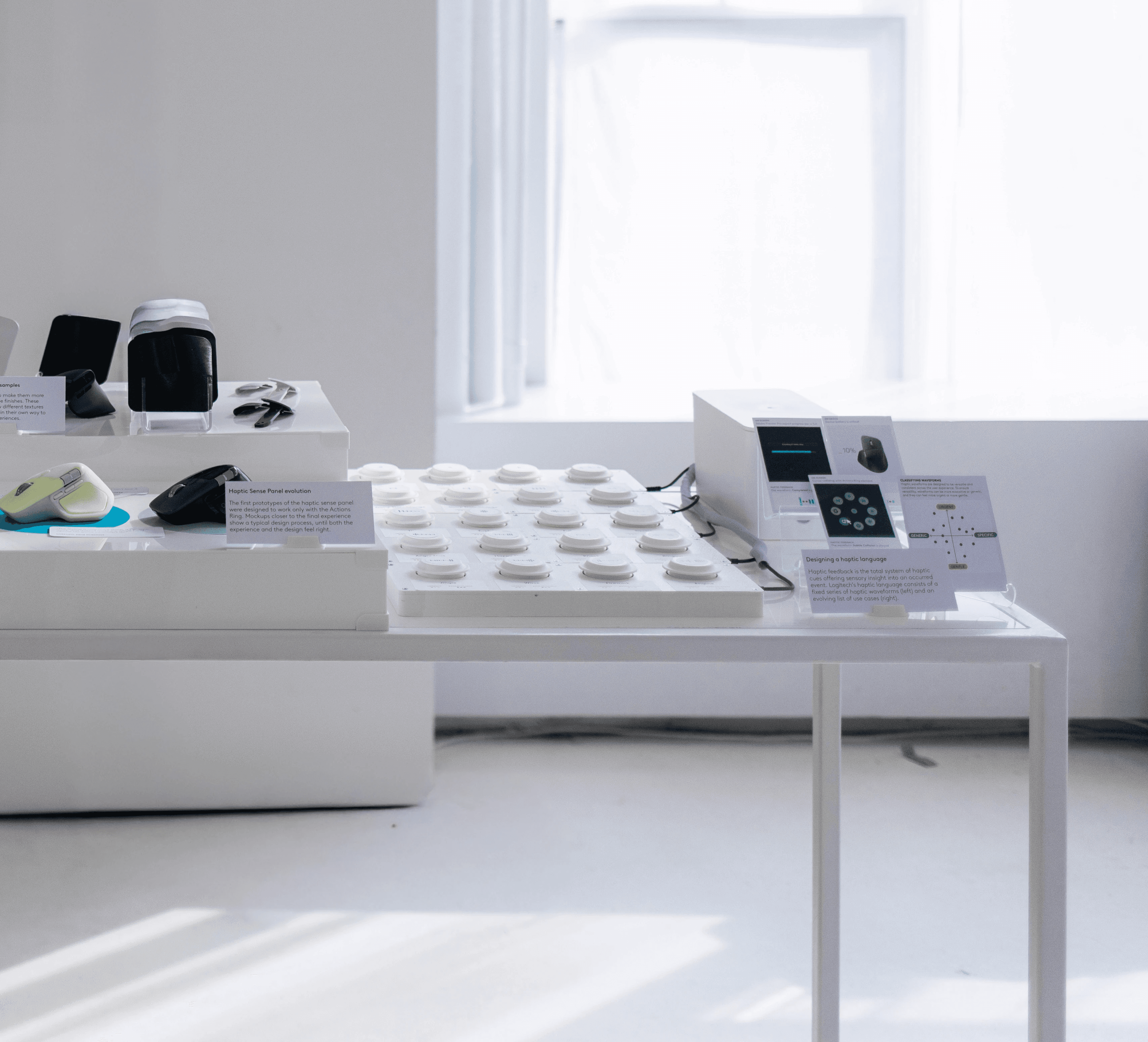
Haptic platform to test, develop, and showcase new haptic capabilities.
Project Date
Jul 2025
Course/Company
Logitech
Scope
CAD, Rapid Prototyping, Mechatronics
Timeline
3 weeks
Tools Used
PTC Creo, 3D Printing (SLA, PolyJet), Arduino, SMD Soldering
Project Overview
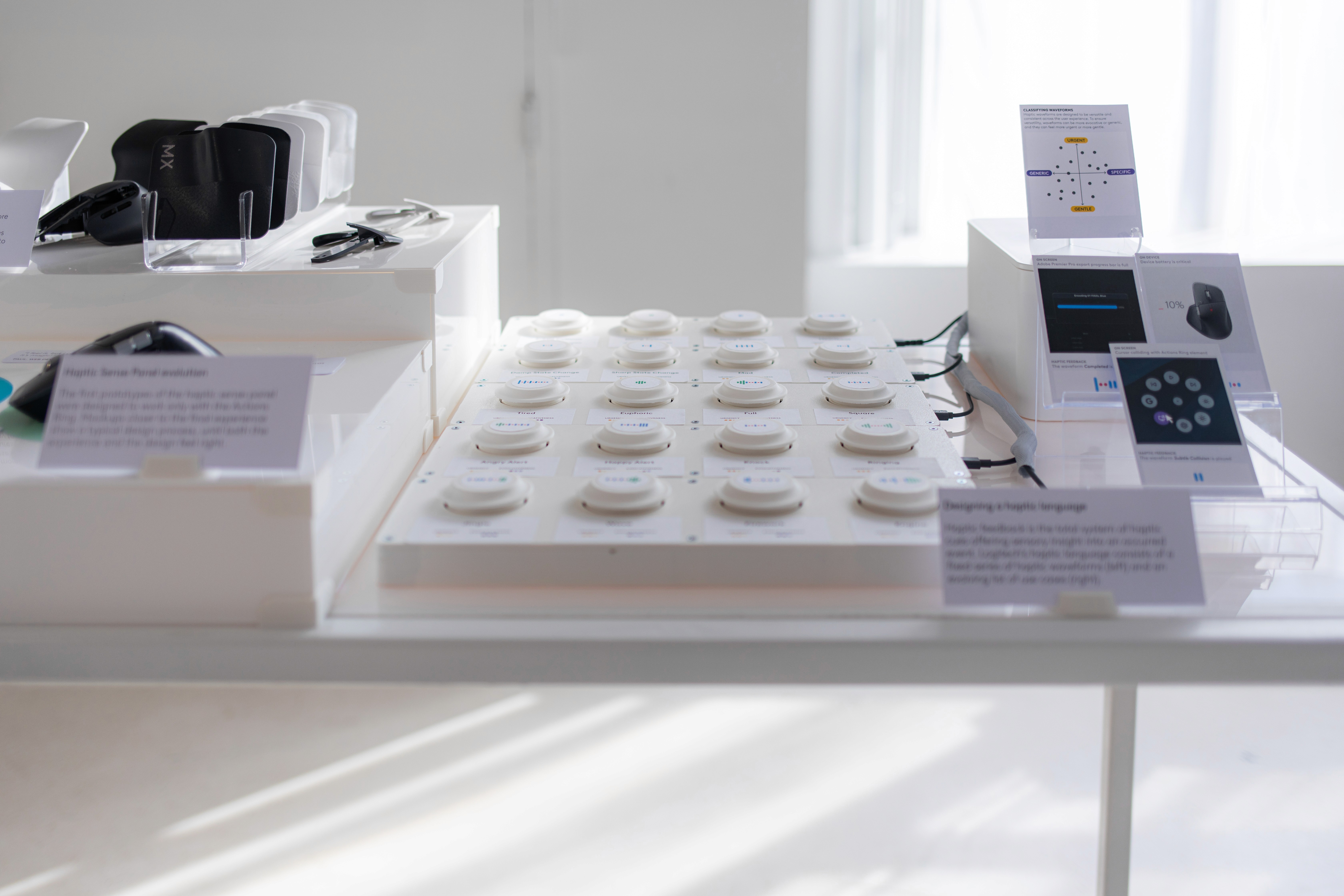
Logitech needed a platform to test, develop, and showcase the possibilities offered by their new haptic products. It needed to be portable, easy to power, and be able to showcase a large variety of haptic patterns.
I developed a simple, easy-to-assemble/maintain array of buttons that could be powered off of a single portable battery.
The final platform flew around the world for press conferences to announce the launch of the MX Master 4 and was a huge favorite among the press and business partners.
Prototyping Process
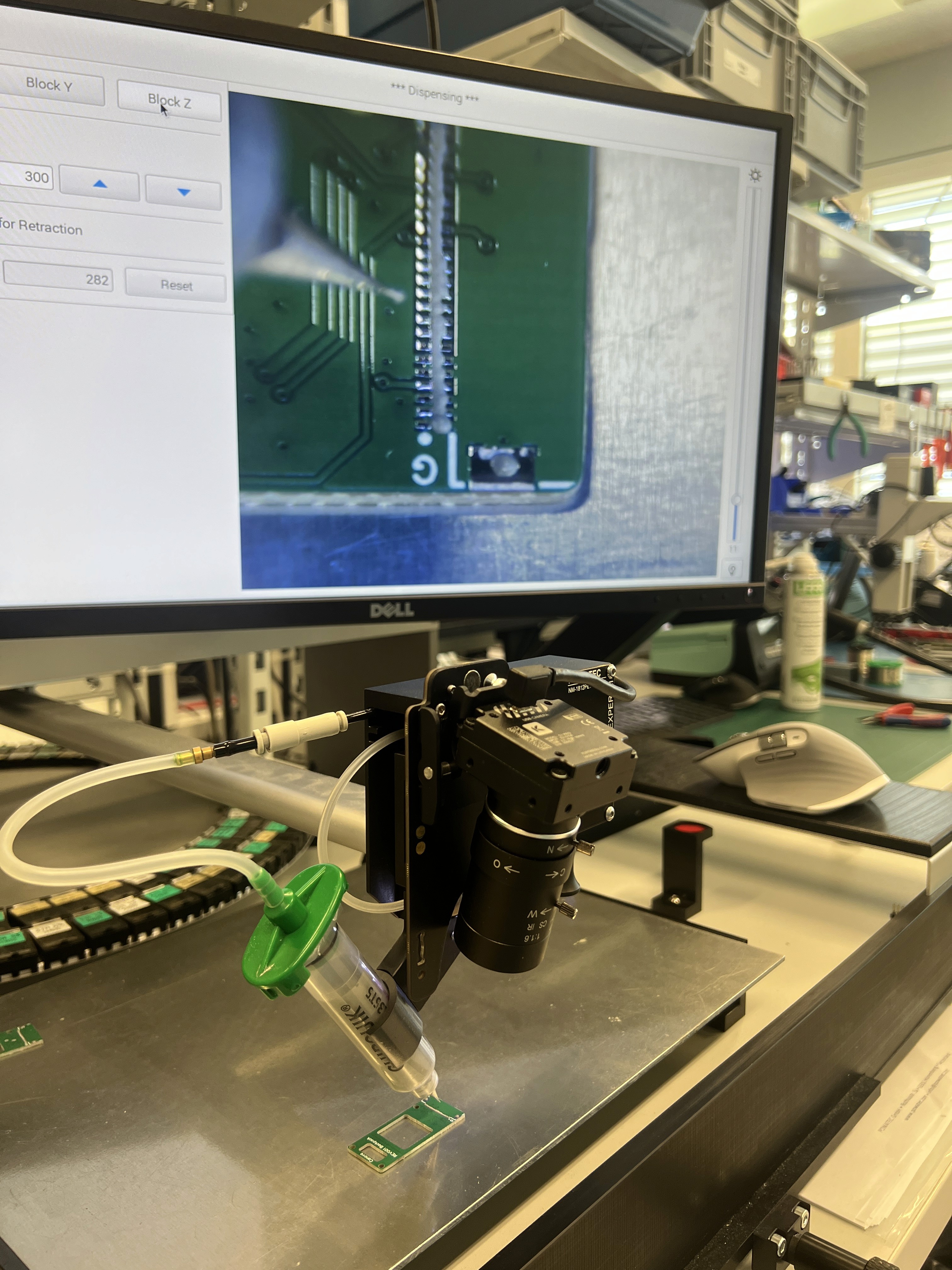
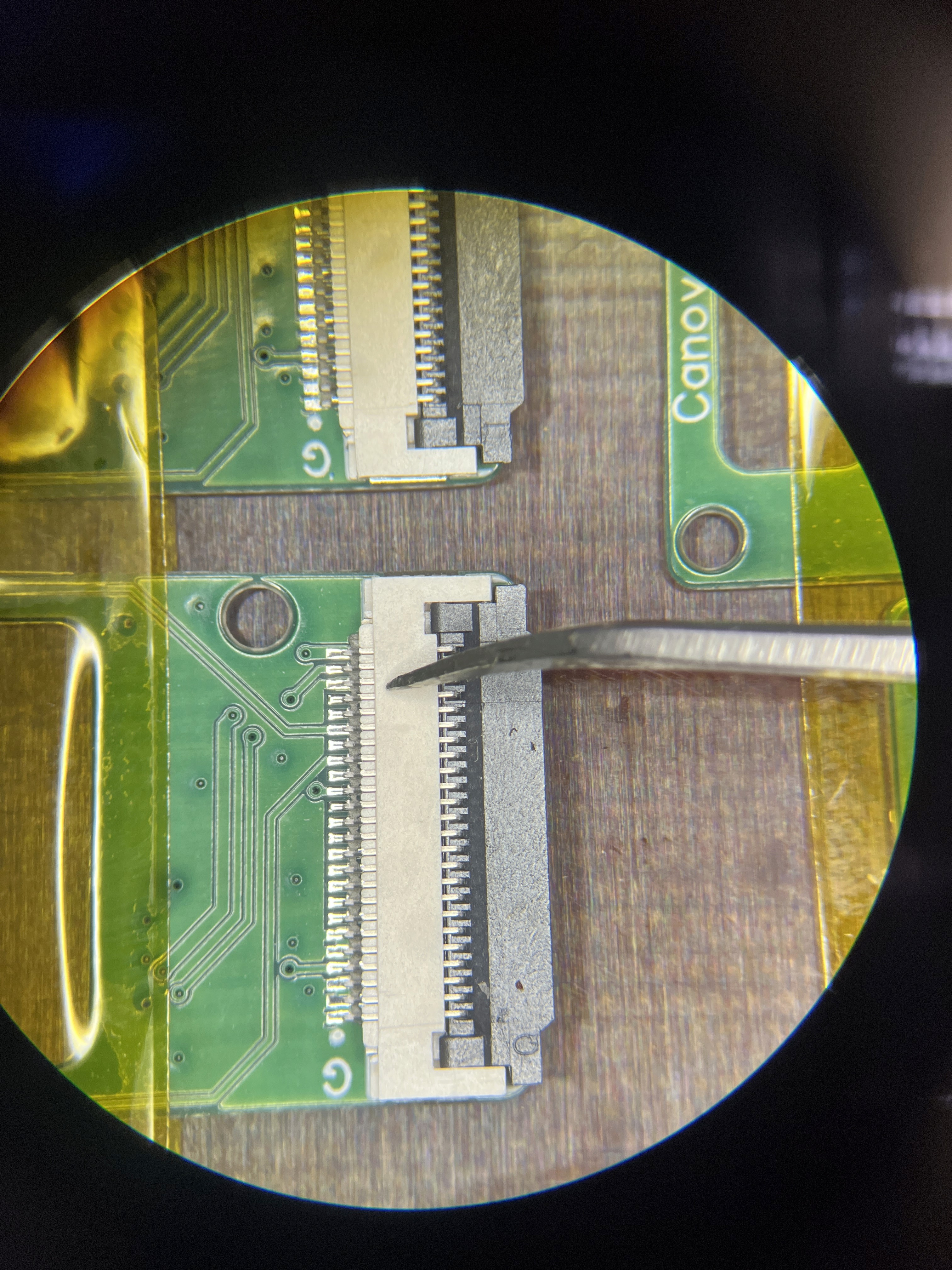
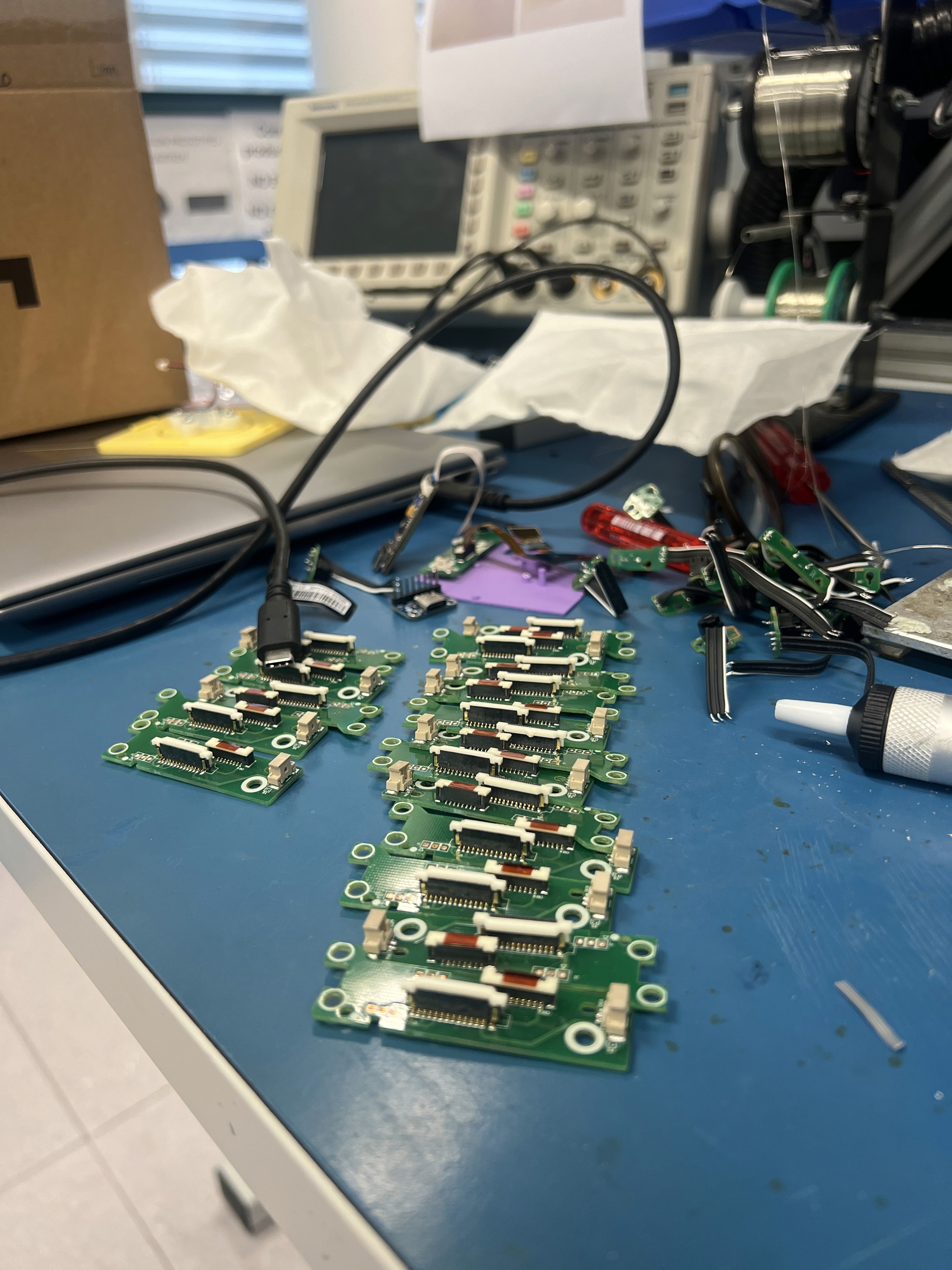
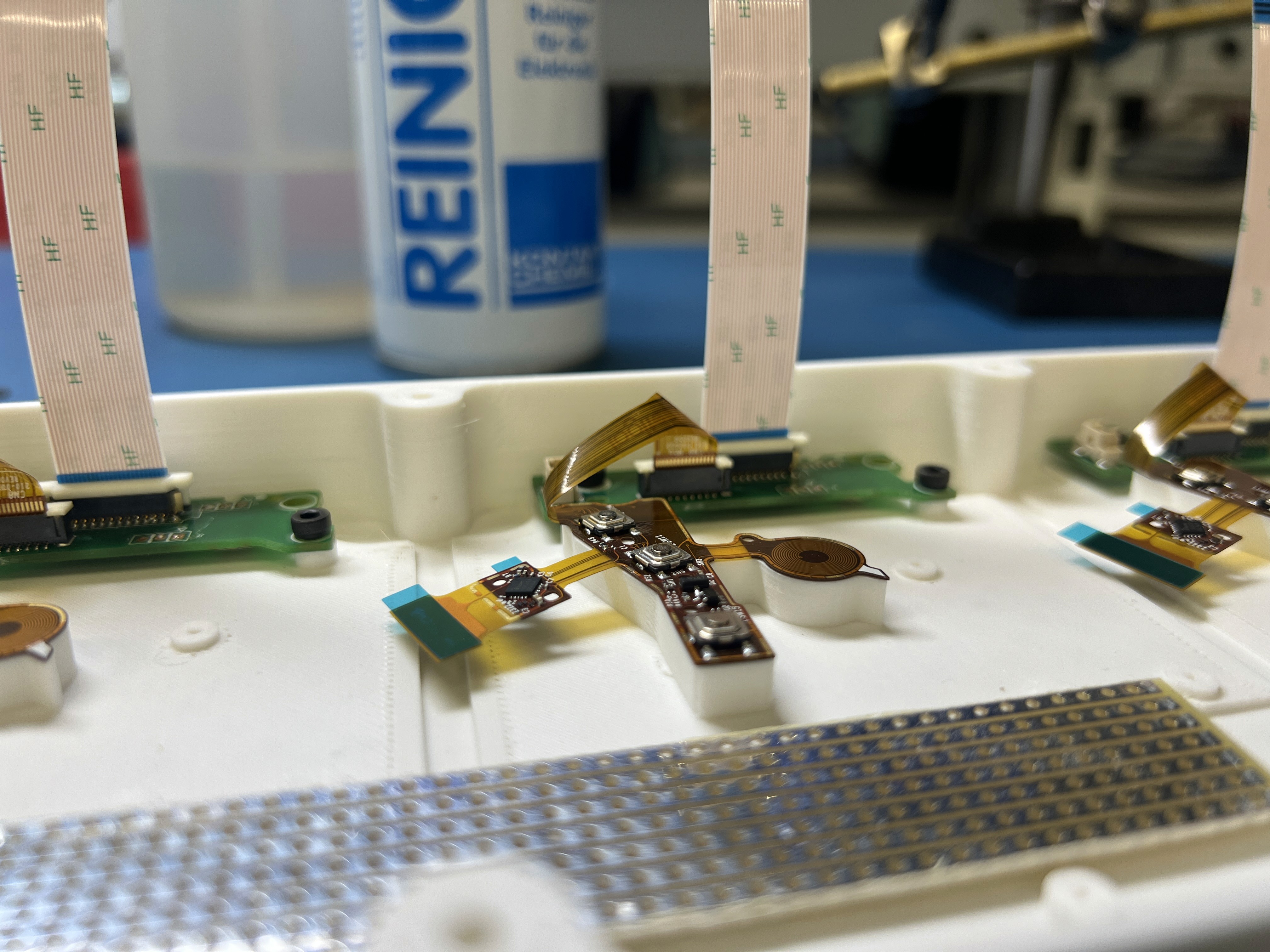
The project started with soldering surface-mounted components to assemble the 25+ microcontrollers that would be required to run the project. This meant that if any microcontroller was damaged or failed, the other 24 would still function.
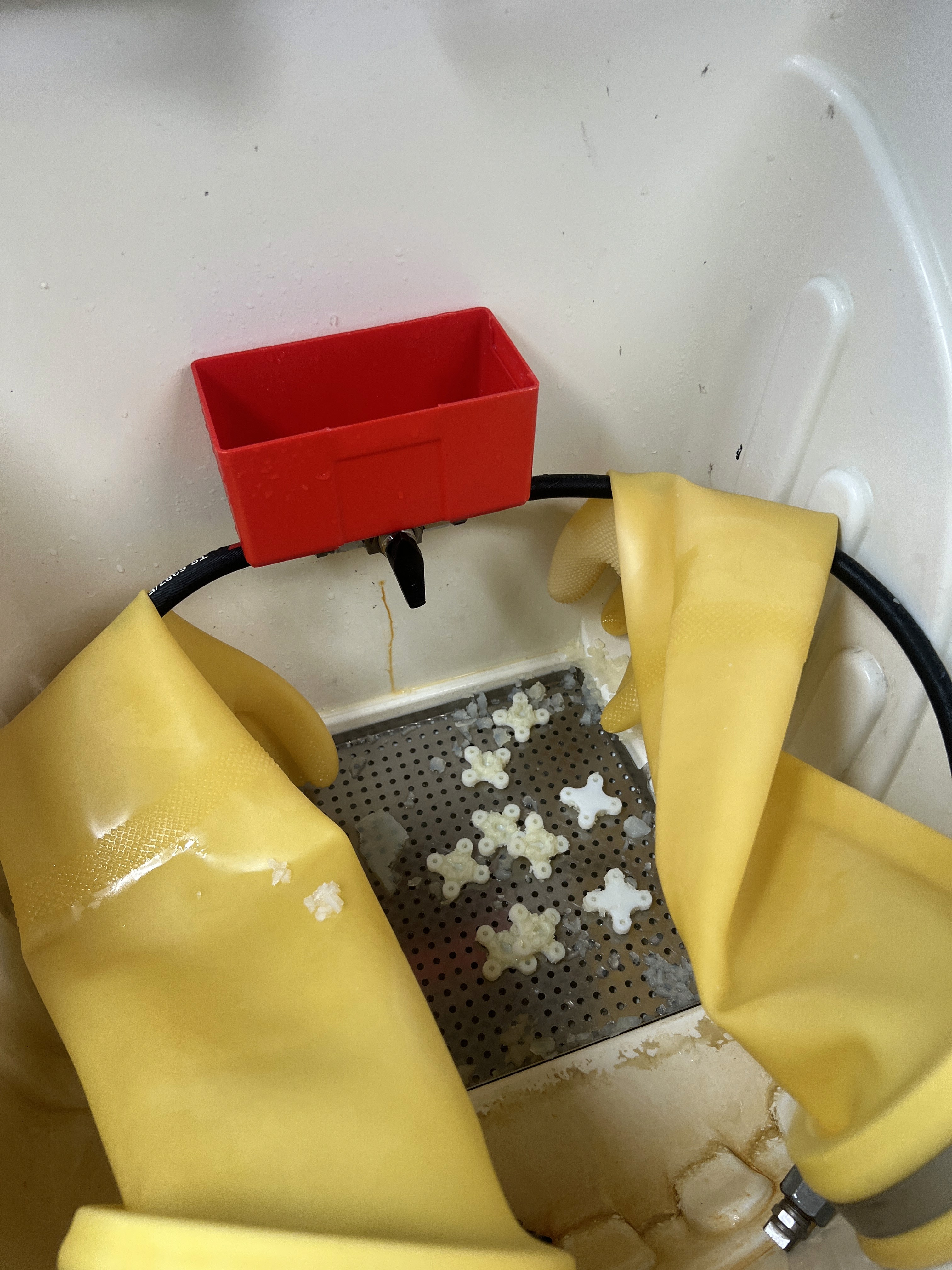
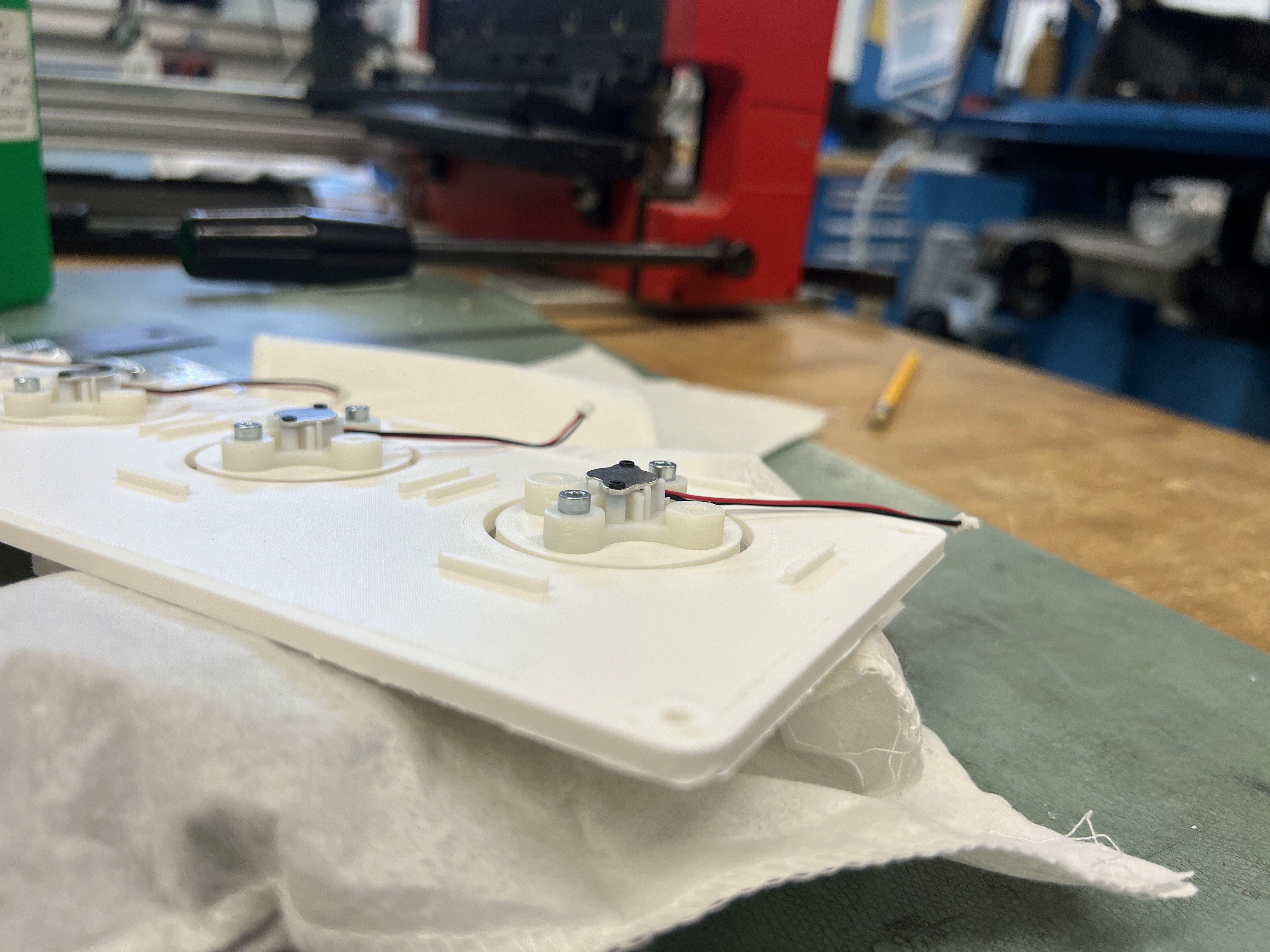
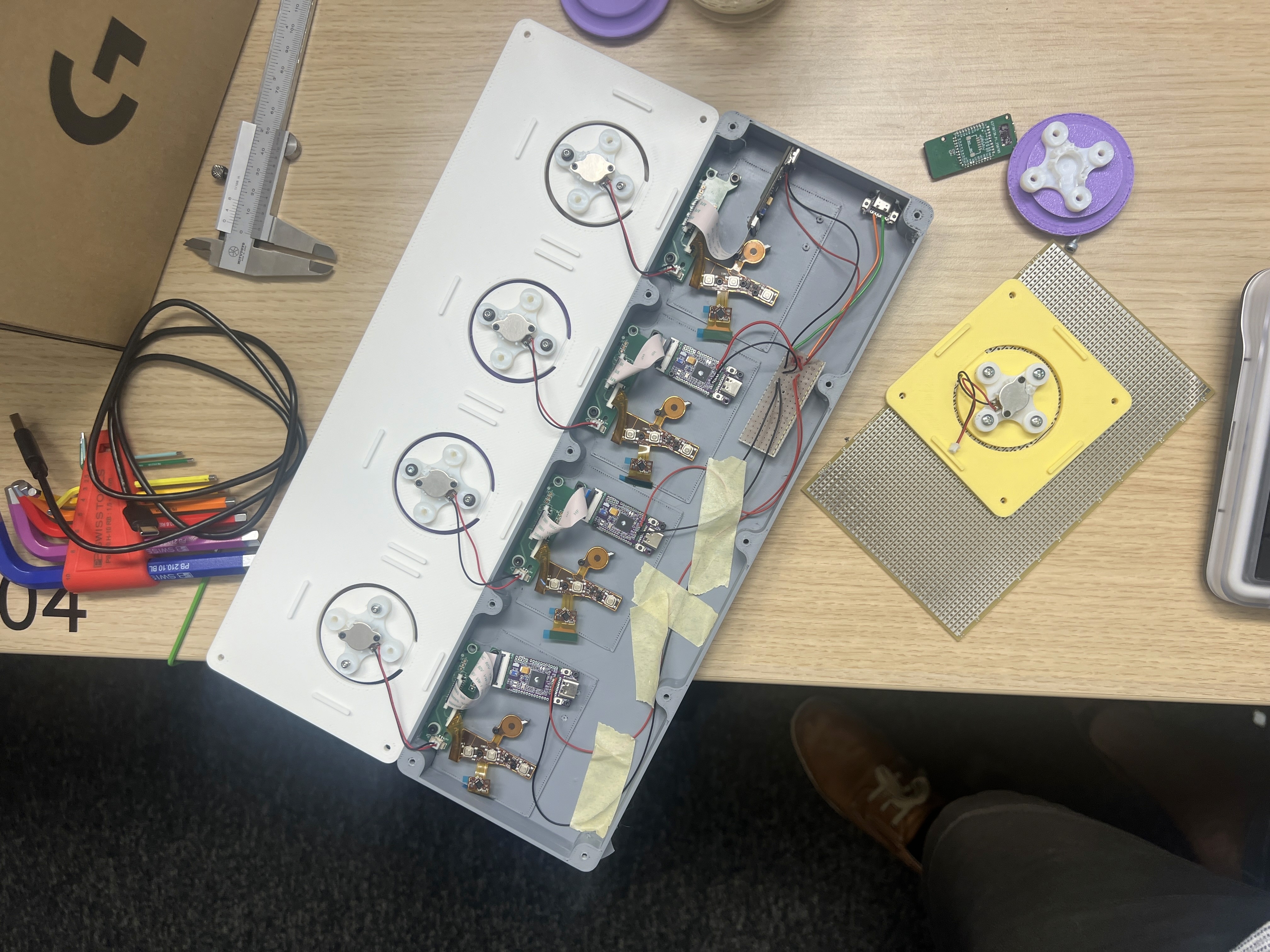
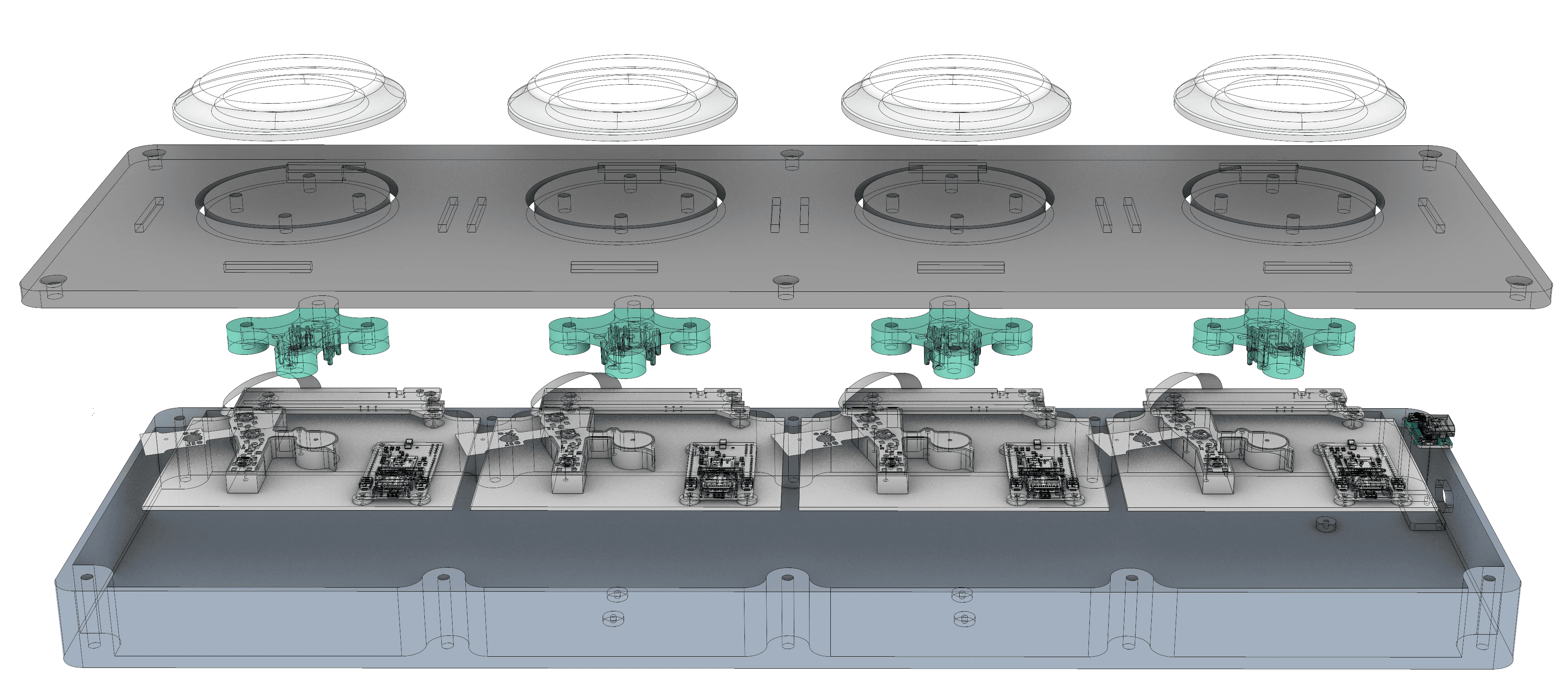
The button was designed to be a simple, print-in-place mechanism to make assembly easier. Mounts were designed to hold the haptic motors in place on the buttons in order to maximize vibration/tactile response. They were then printed on a Stratasys PolyJet printer for higher fidelity.
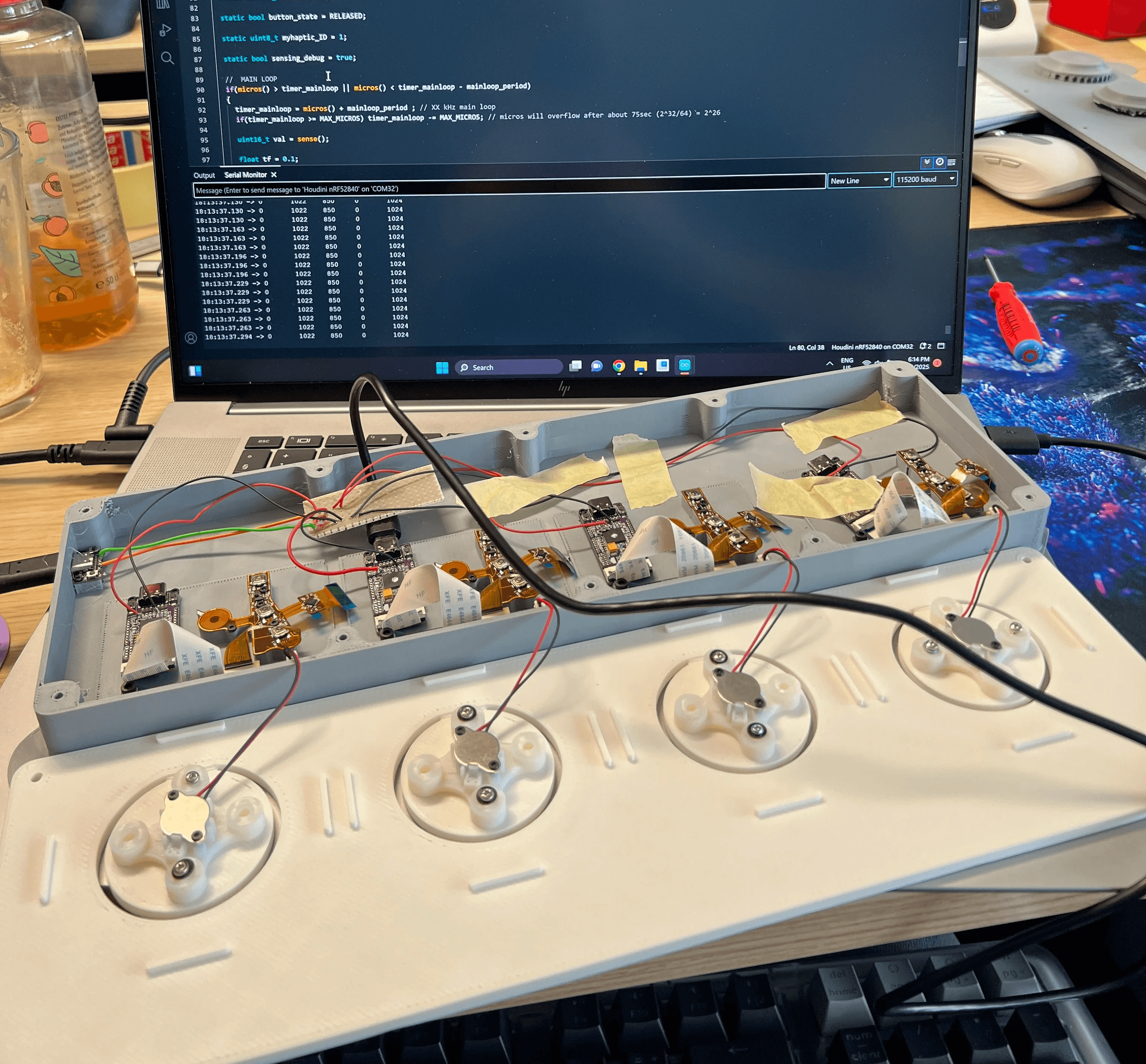
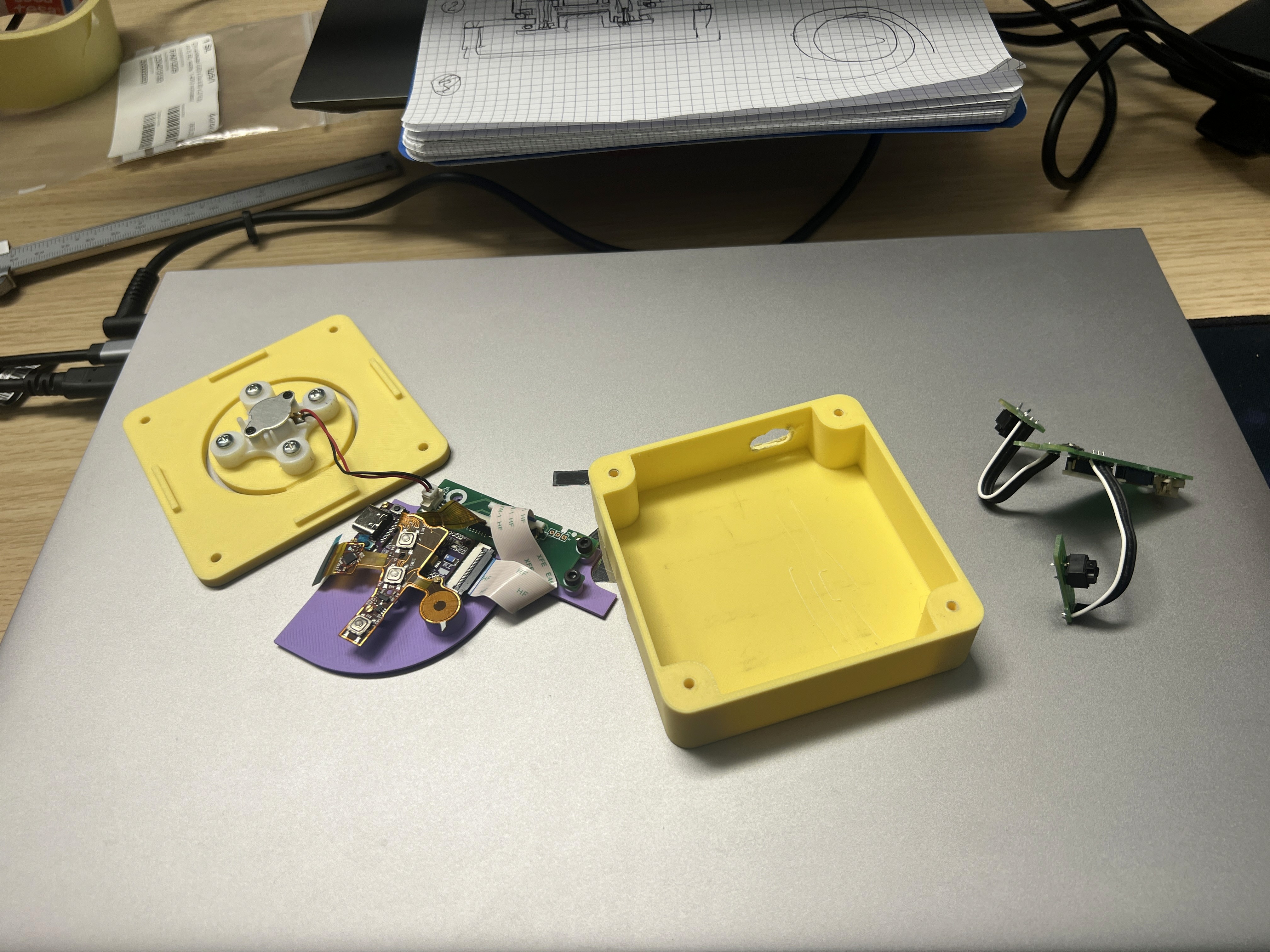
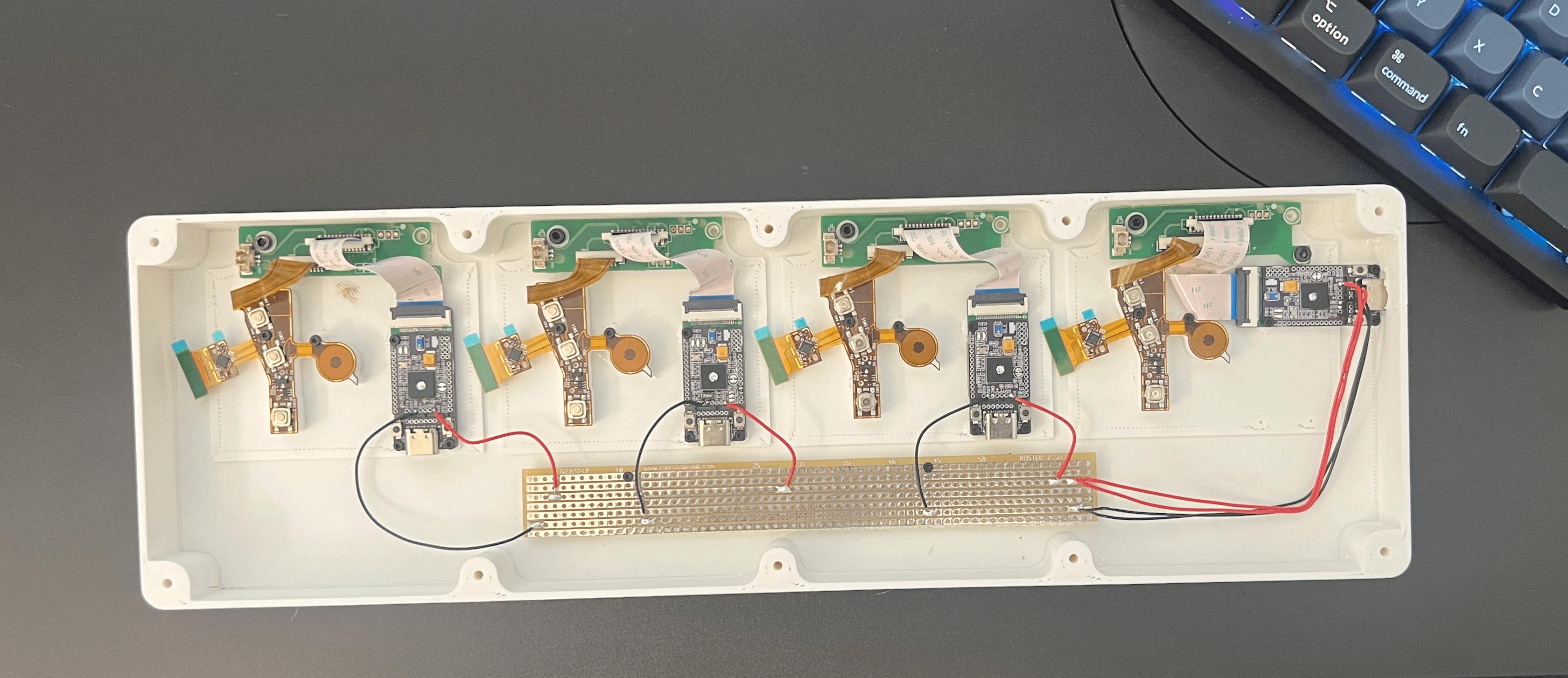
I then prototyped the "final" assembly version (4 buttons in a row) with work-in-progress PCB mounts and some approximate soldering and wiring. I knew the "final" ones would need to be cleaner, but this prototype allowed me to develop the firmware of the device.
The firmware was programmed in Arduino on top of C based firmware. Haptic patterns and behavior had to be customized and tuned to get the desired experience.
Refinement & finalization
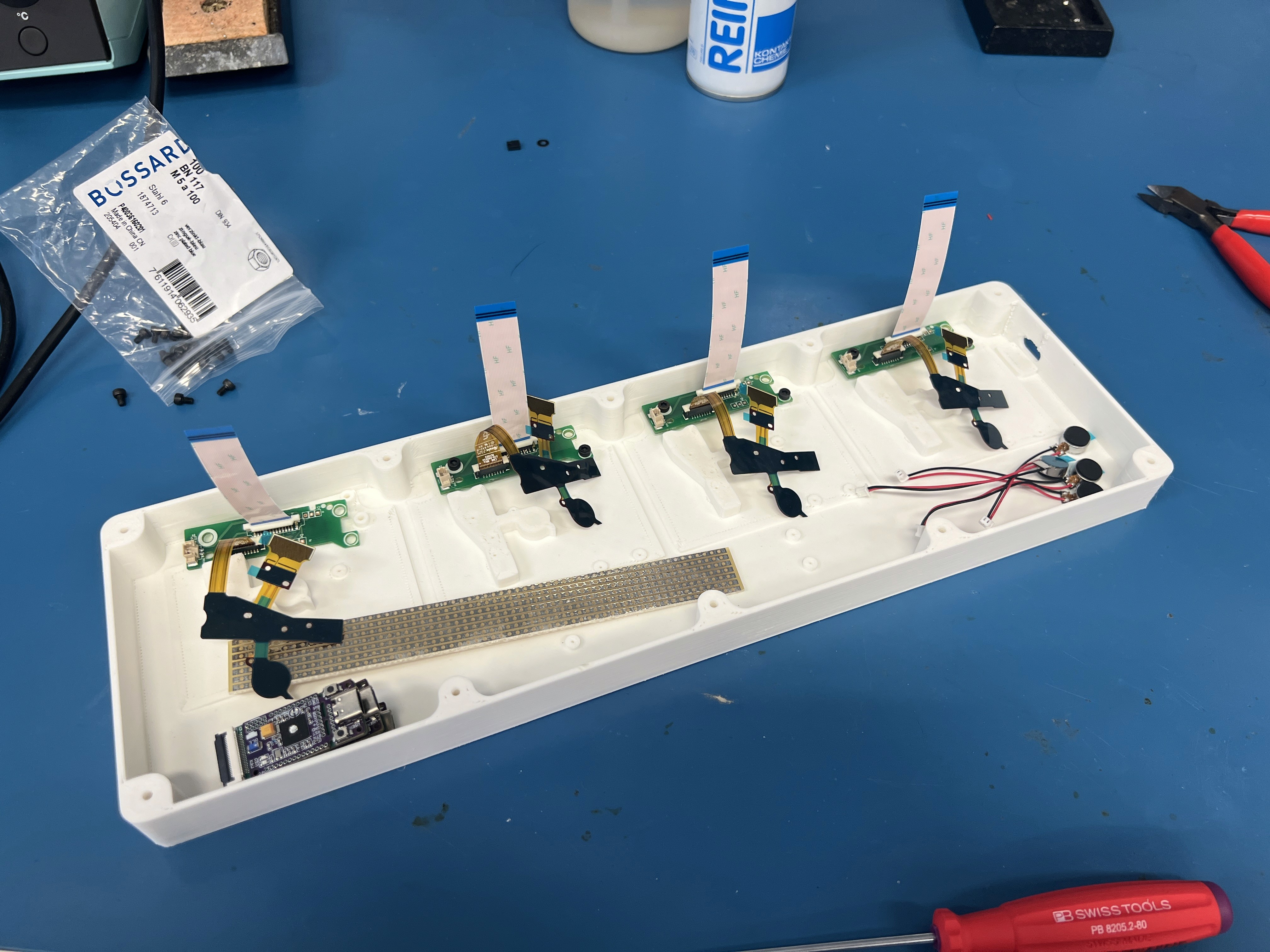
For the final result, I focused on cleanliness: well-mounted PCBs, clear wire routing for shared parallel power delivery, and easy-to-access USBs for easy firmware updating/upgrades.
Result & Impact
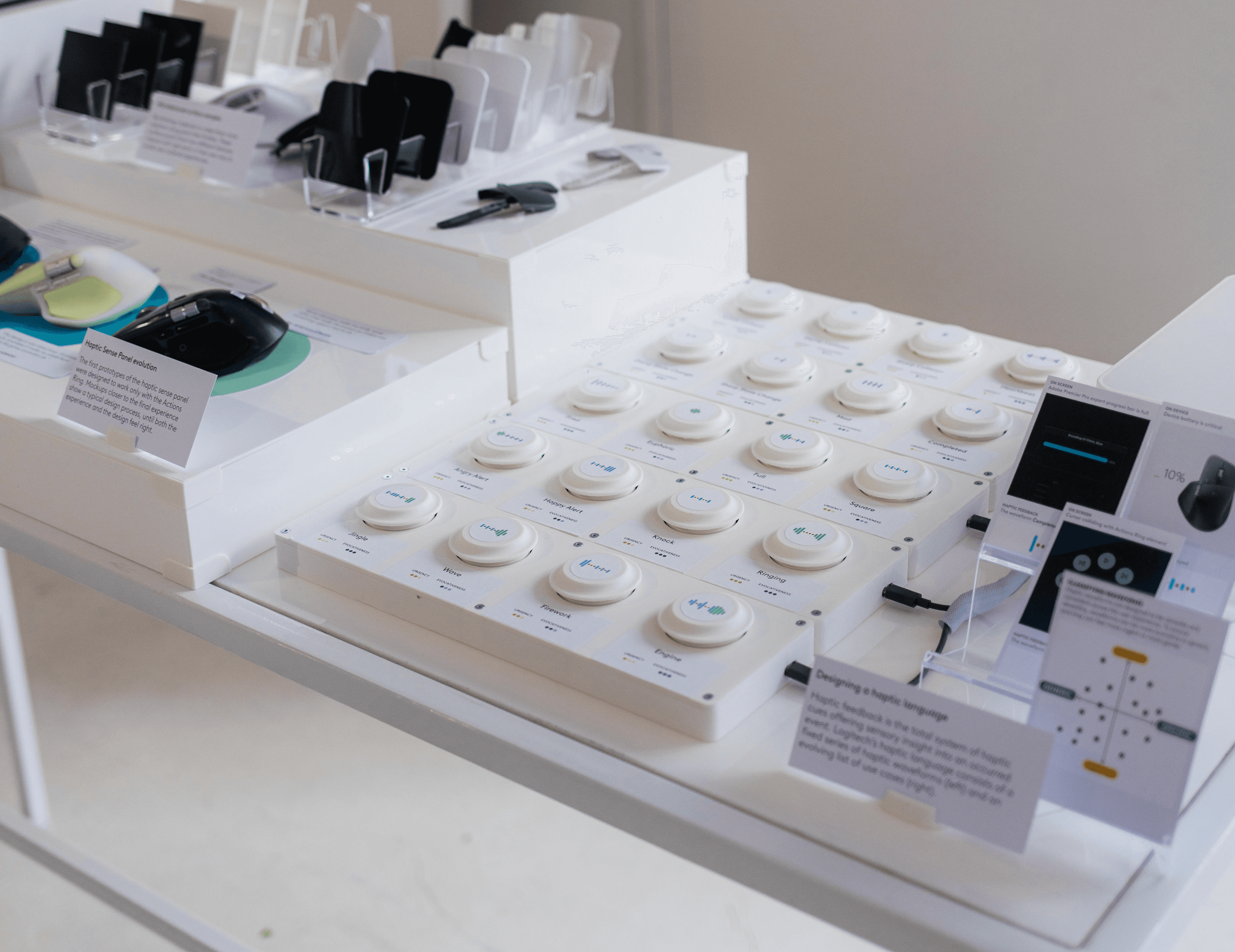
The final project was sent off to multiple press shows for the launch of the MX Master 4, one of Logitech's first haptic-enabled mice. It drew lots of attention as it allowed multiple users to interact, play, and feel the various haptic patterns that would be present within the mouse.