Low-Cost Steering Wheel R&D
Passive Force Feedback & Dampening System
Project Date
Jul 2025
Course/Company
Logitech
Scope
CAD, Rapid Prototyping, Dynamics
Timeline
6 weeks
Tools Used
PTC Creo, 3D Printing (SLA, PolyJet), Laser Cutting
Project Overview
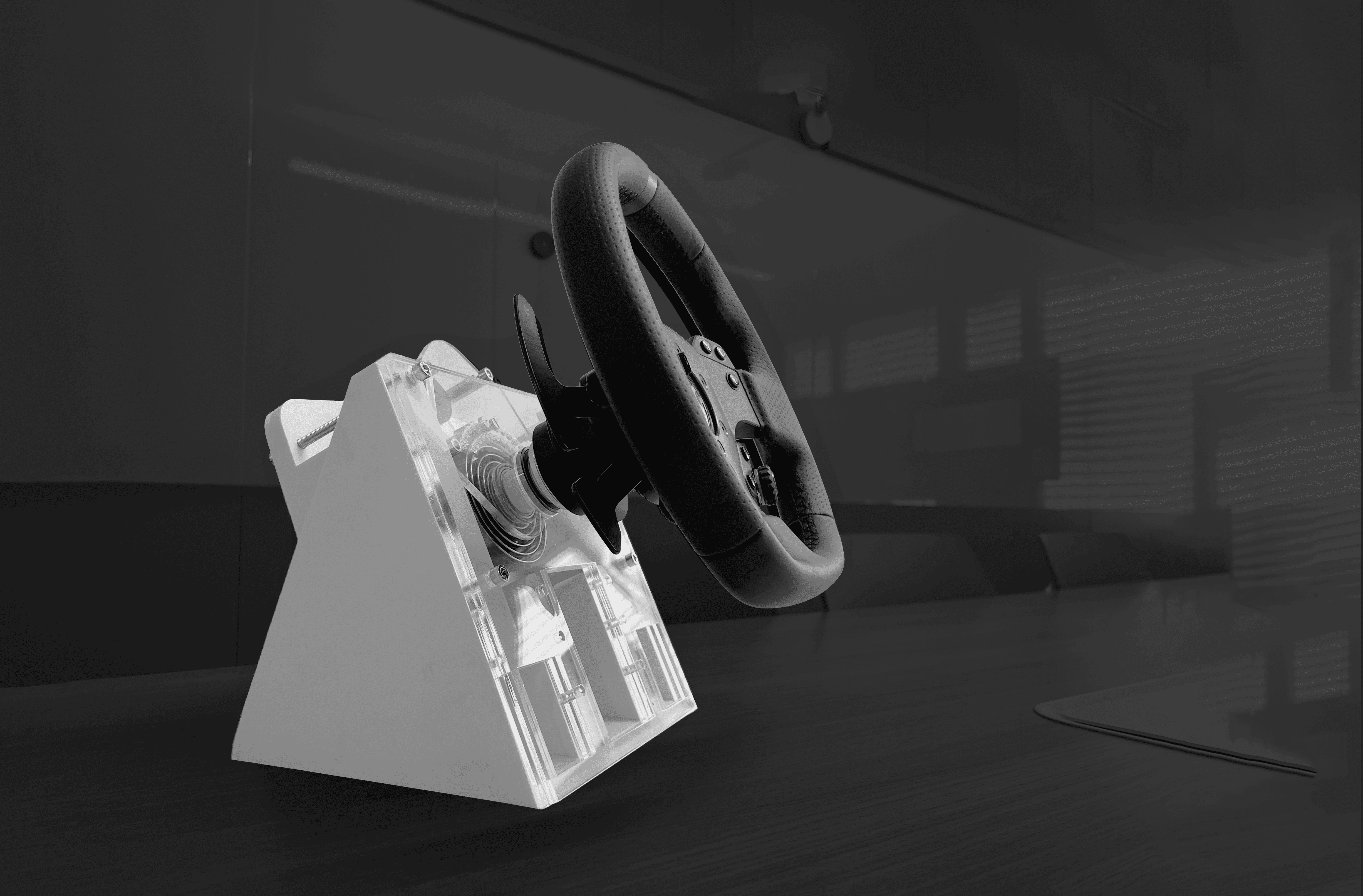
Logitech needed a low-cost steering wheel with a passive force-feedback mechanism. Some of the challenges with previous prototypes included lack of modularity, lack of a linear moment-angle relationship, and lack of damping.
I designed a modular testing platform (where the mechanism could be hotswapped), a tunable spring pre-tensioning module, and a hydraulic damping mechanism.
The final prototype exceeded expectations and was sent to Logitech's Taiwan office for further development.
Modules
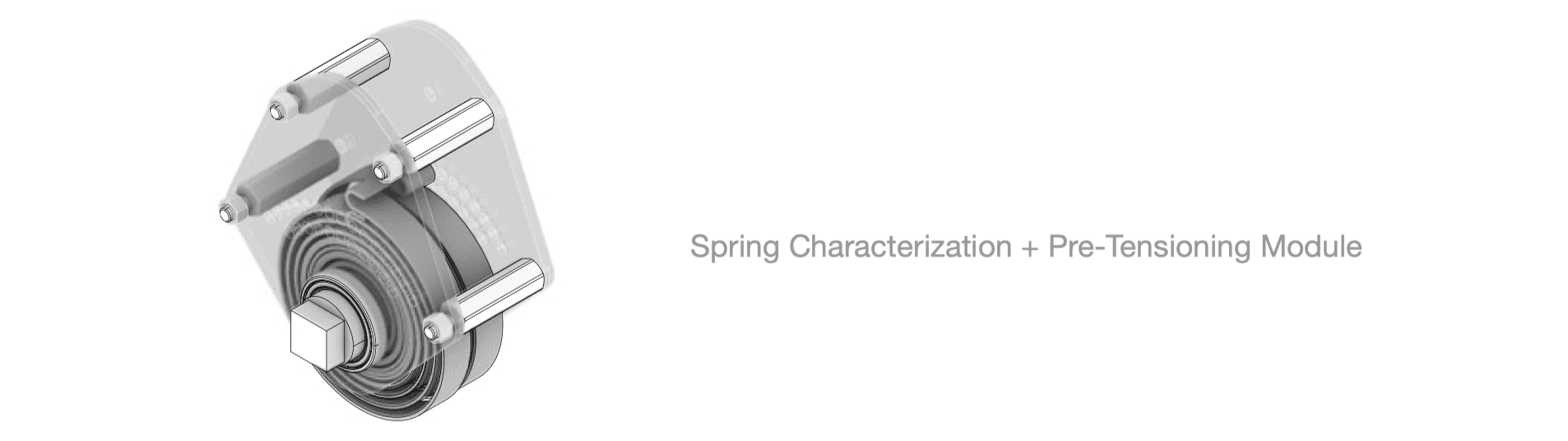
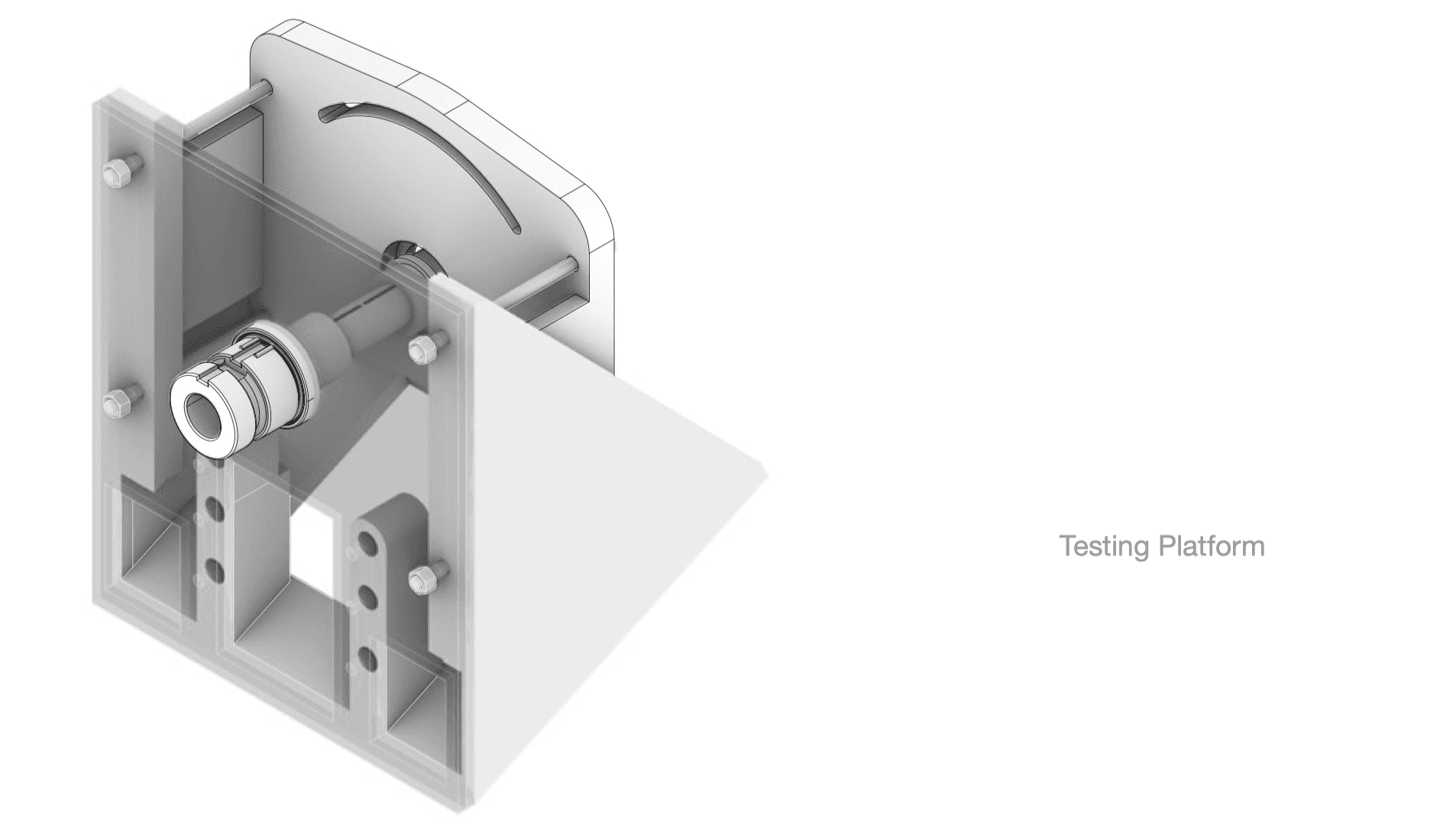
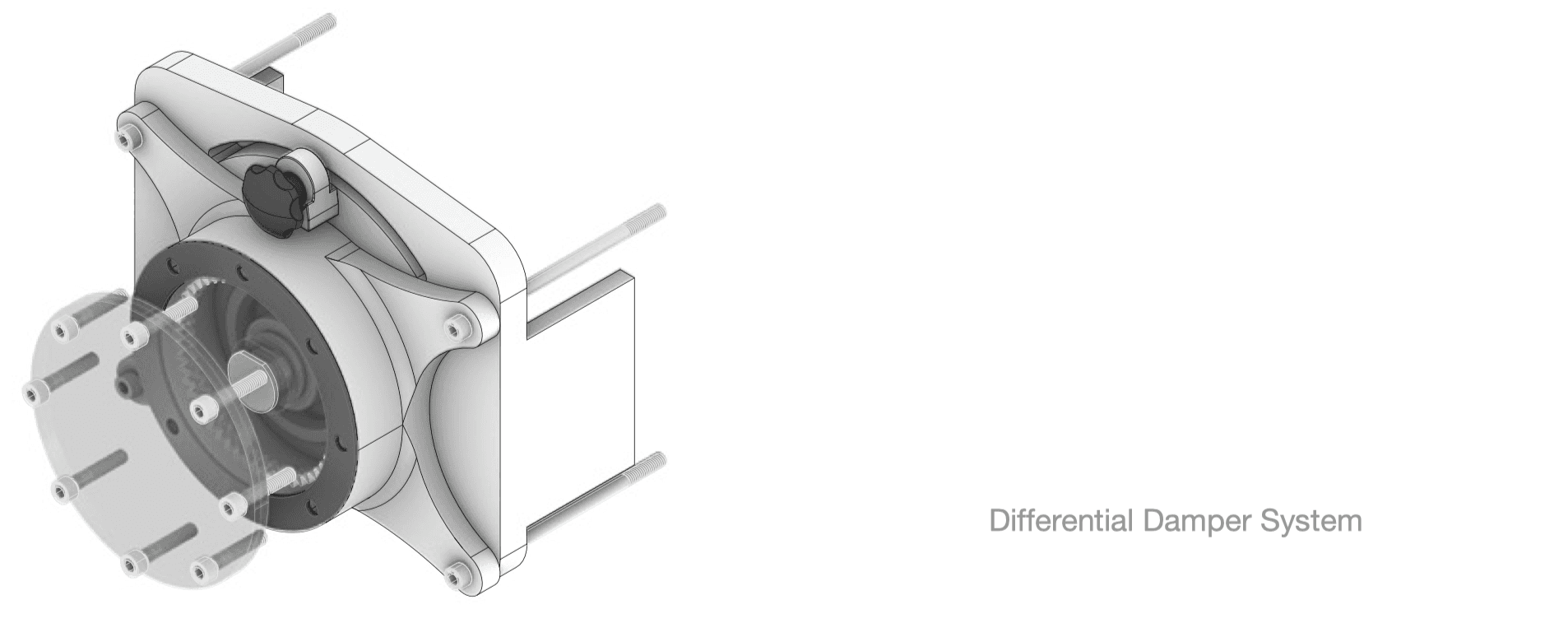
Testing platform and torsion spring module fabrication
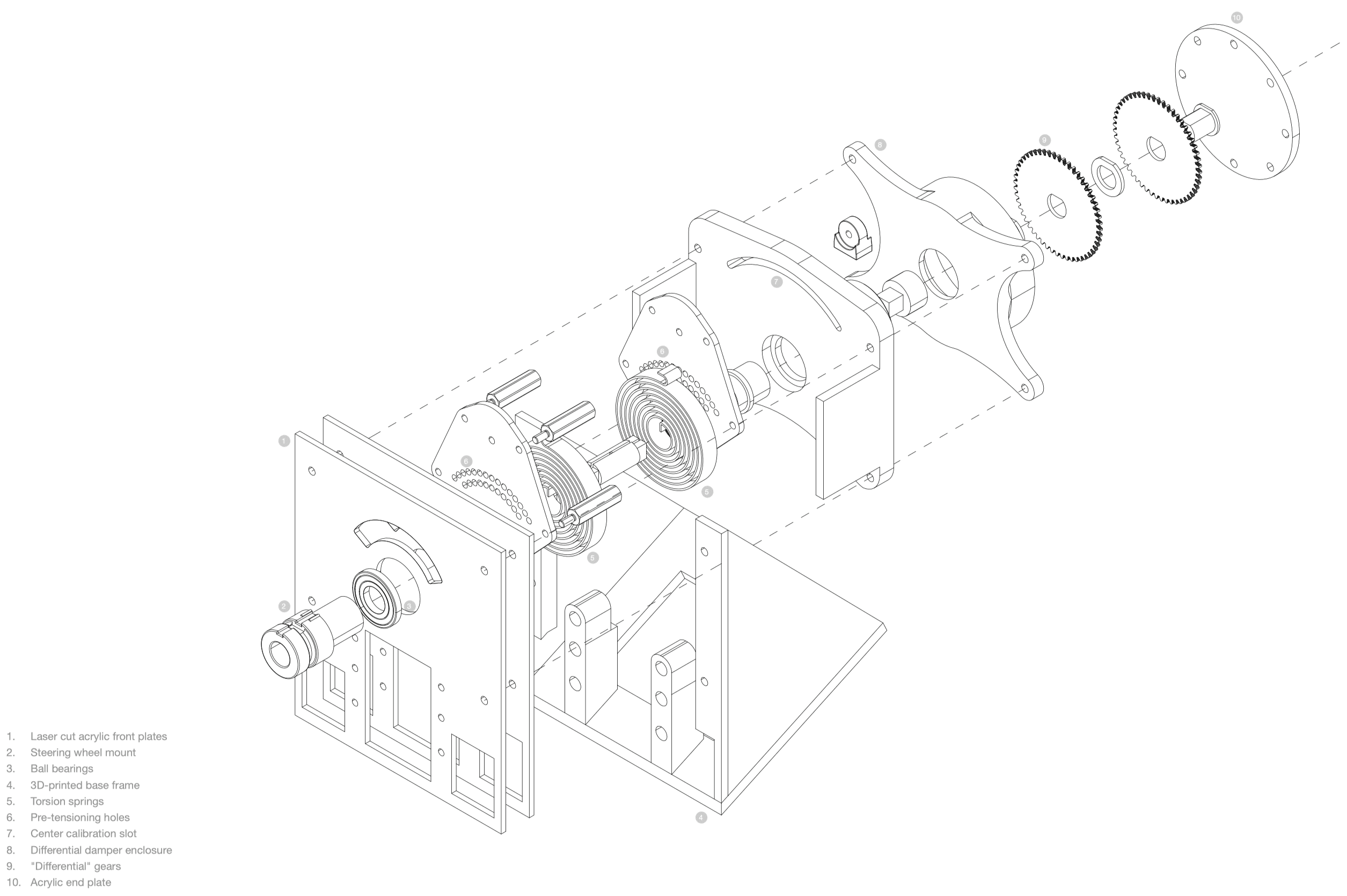
After the torsion springs arrived, the project began with an initial pre-tensioner prototype to verify the springs' characteristics. This laser cut prototype was rapid and also served to verify dimensions and spring behavior.
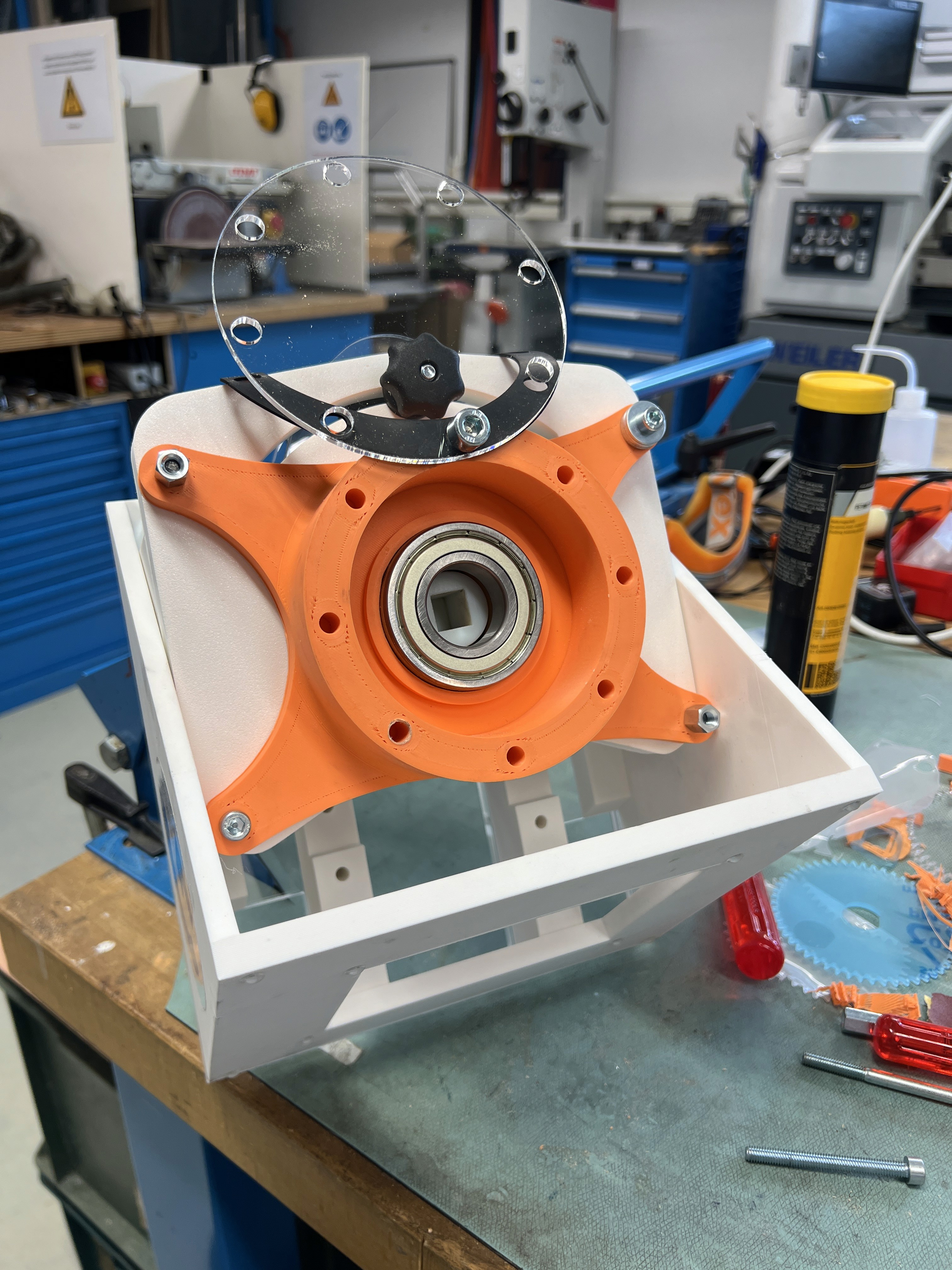
Development continued by 3D printing the main frame of the testing platform.
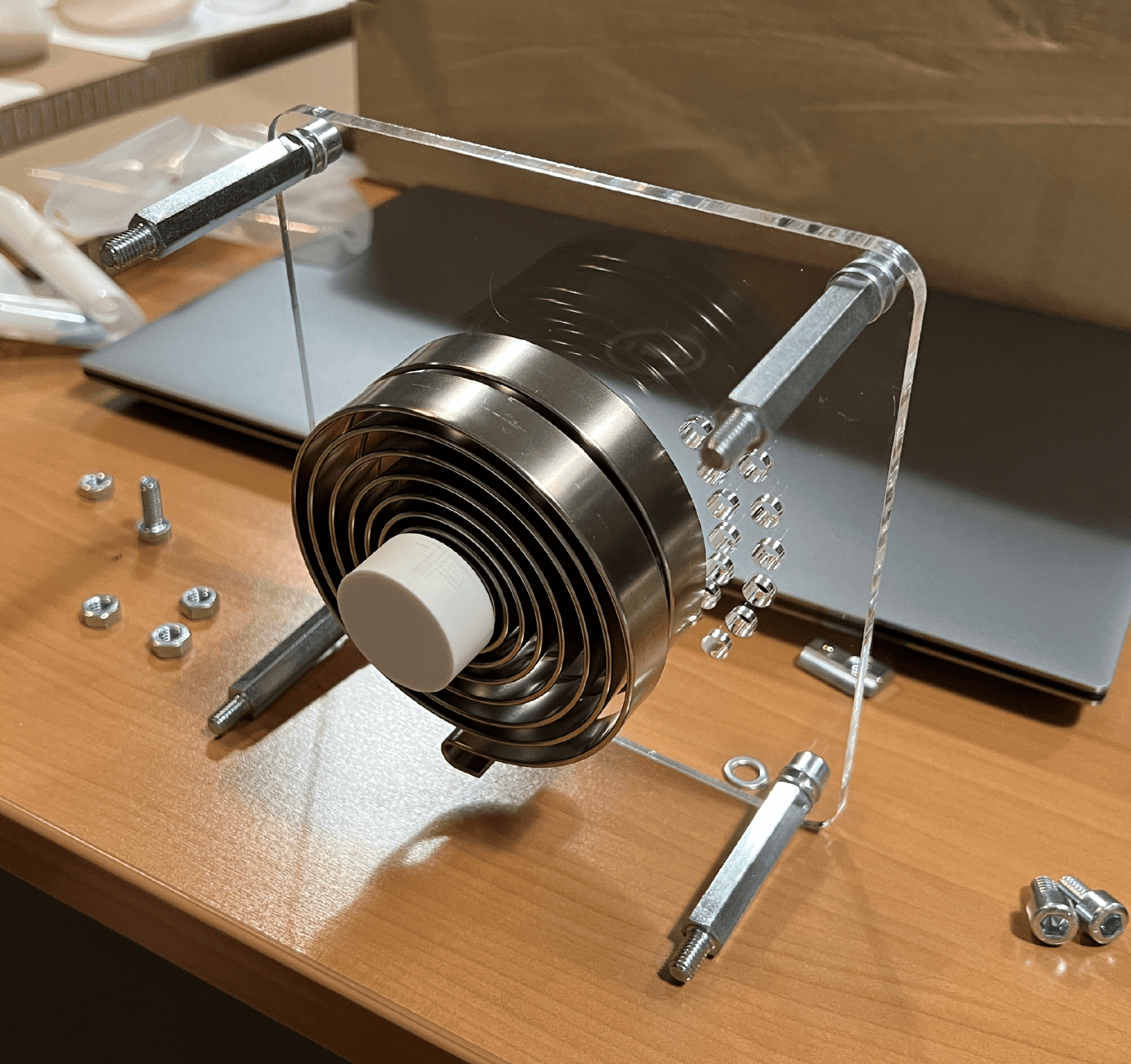
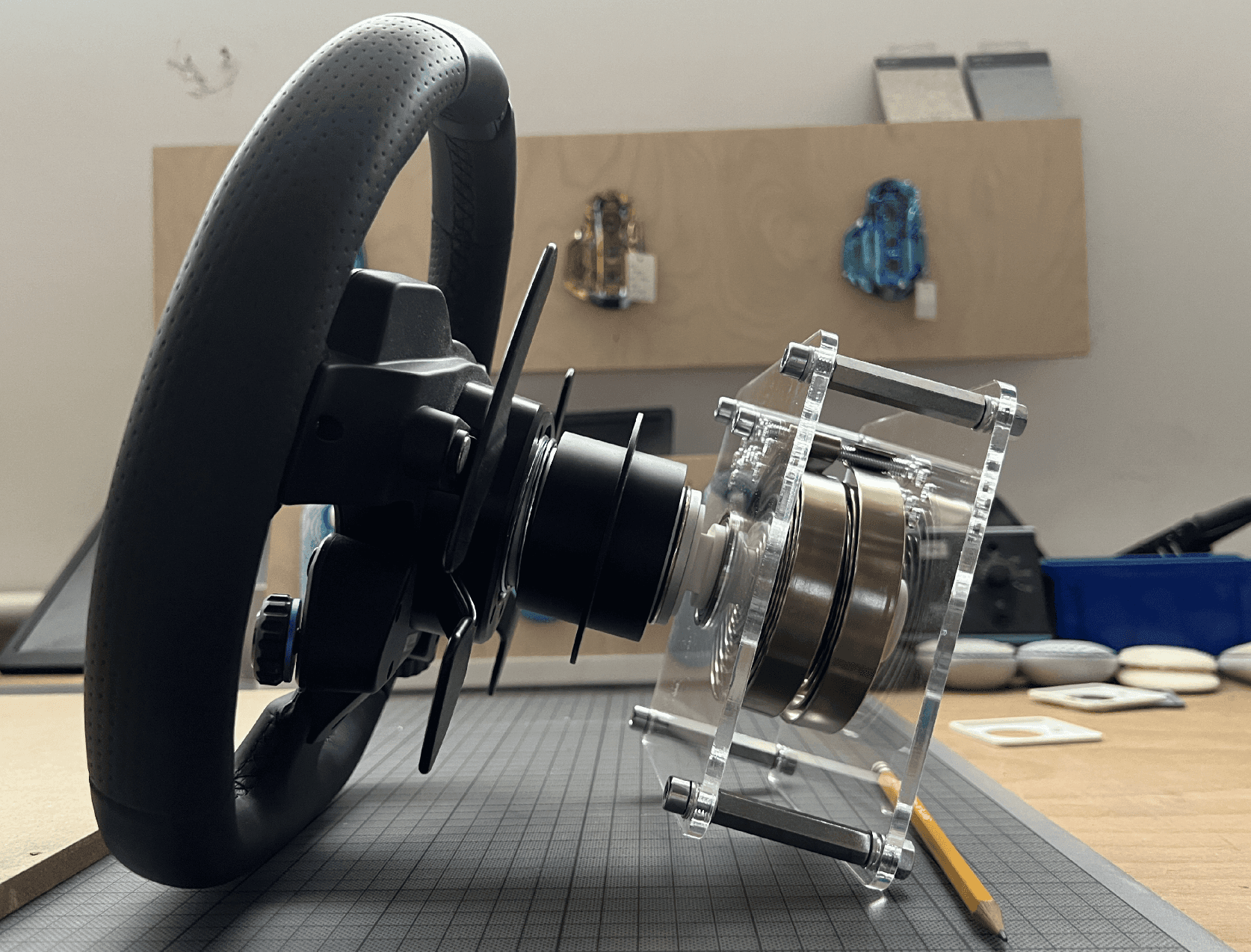
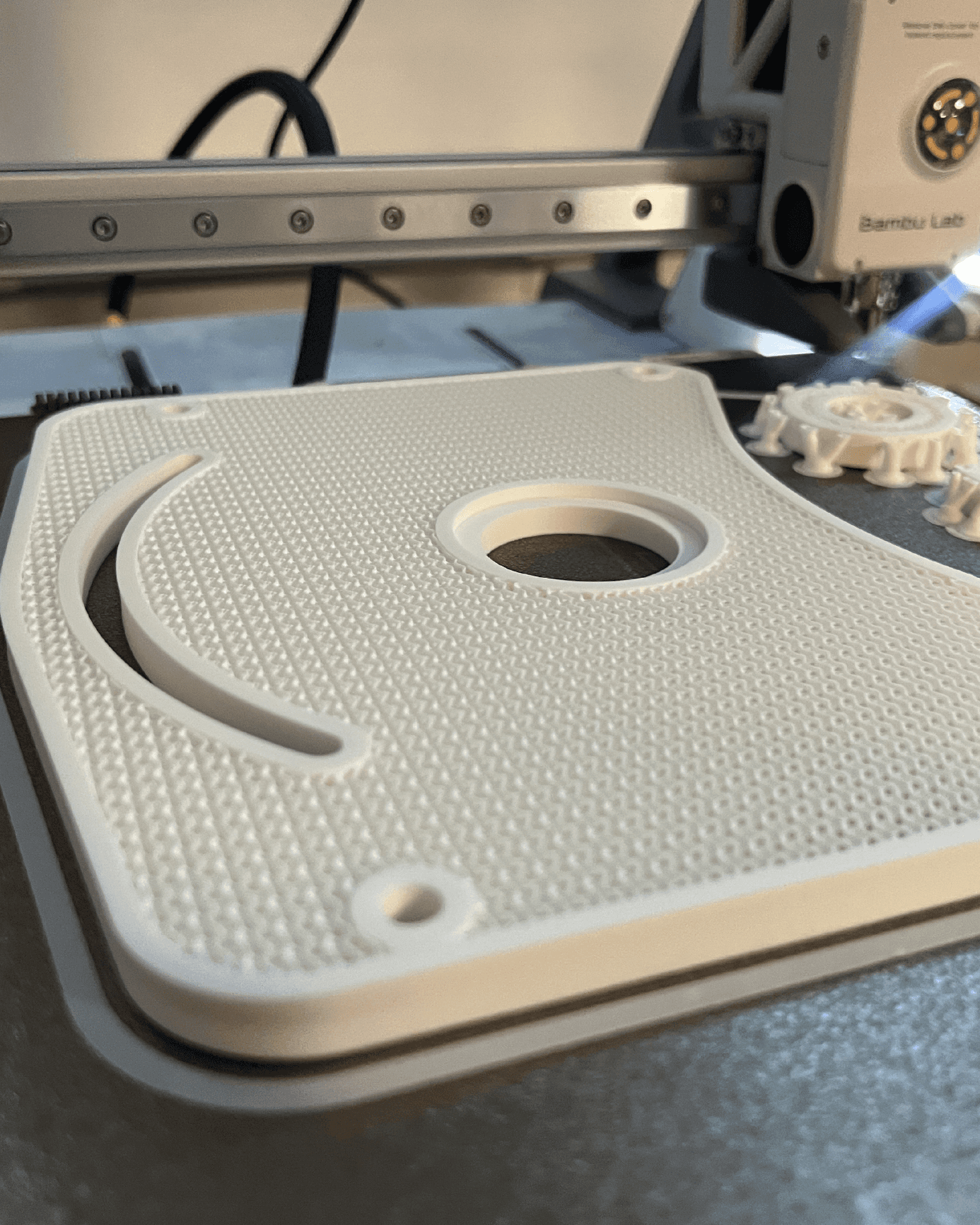
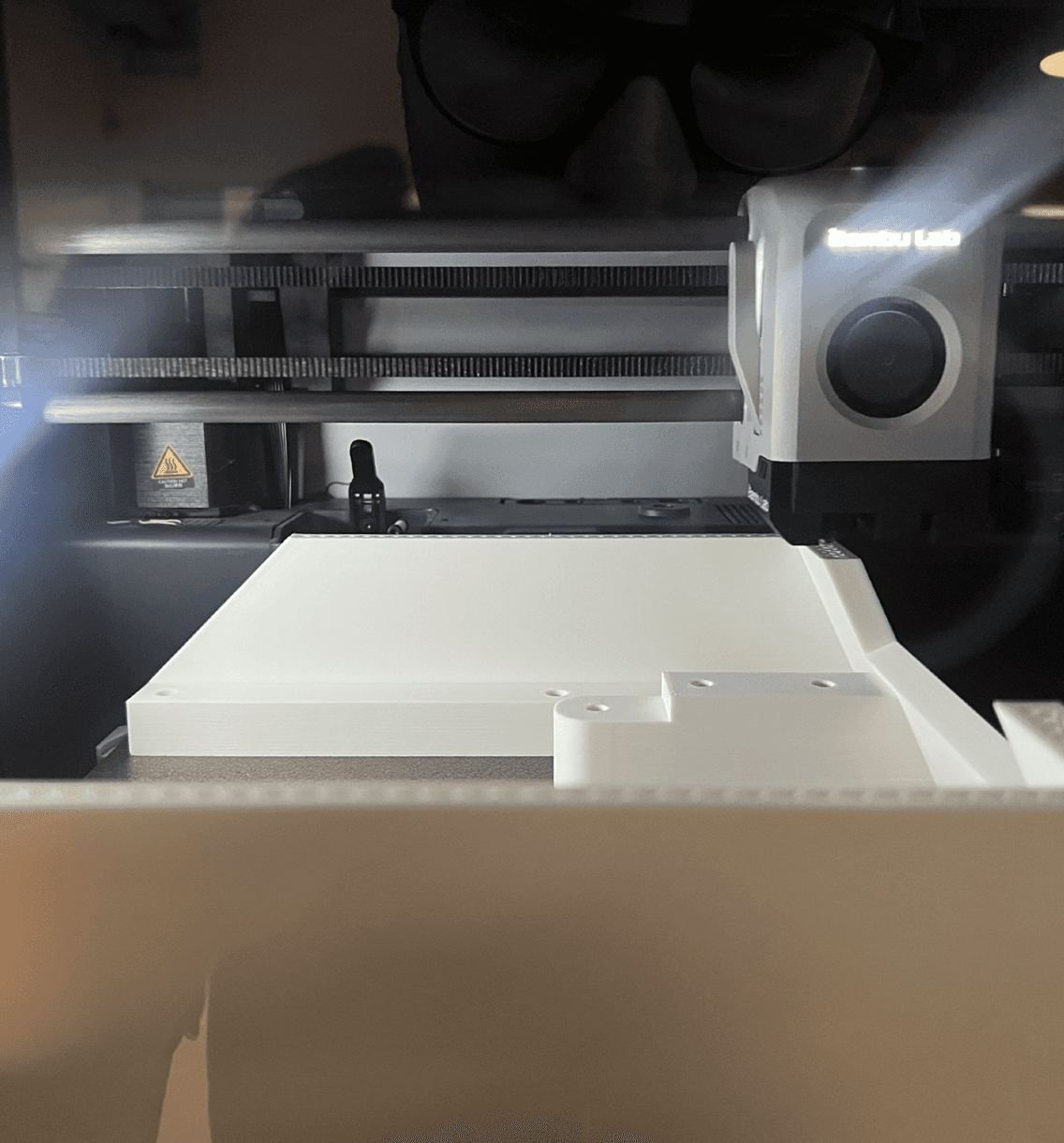
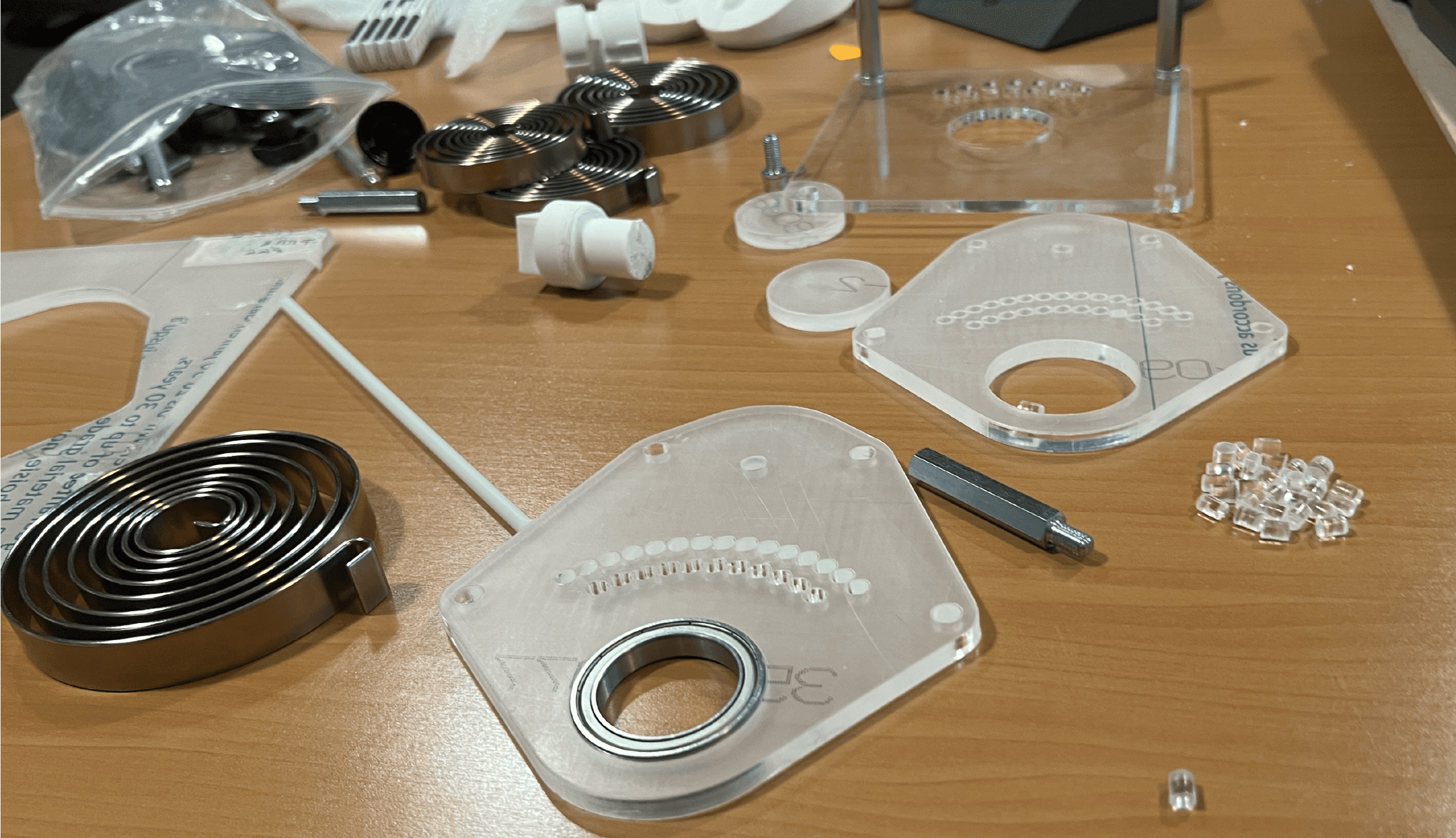
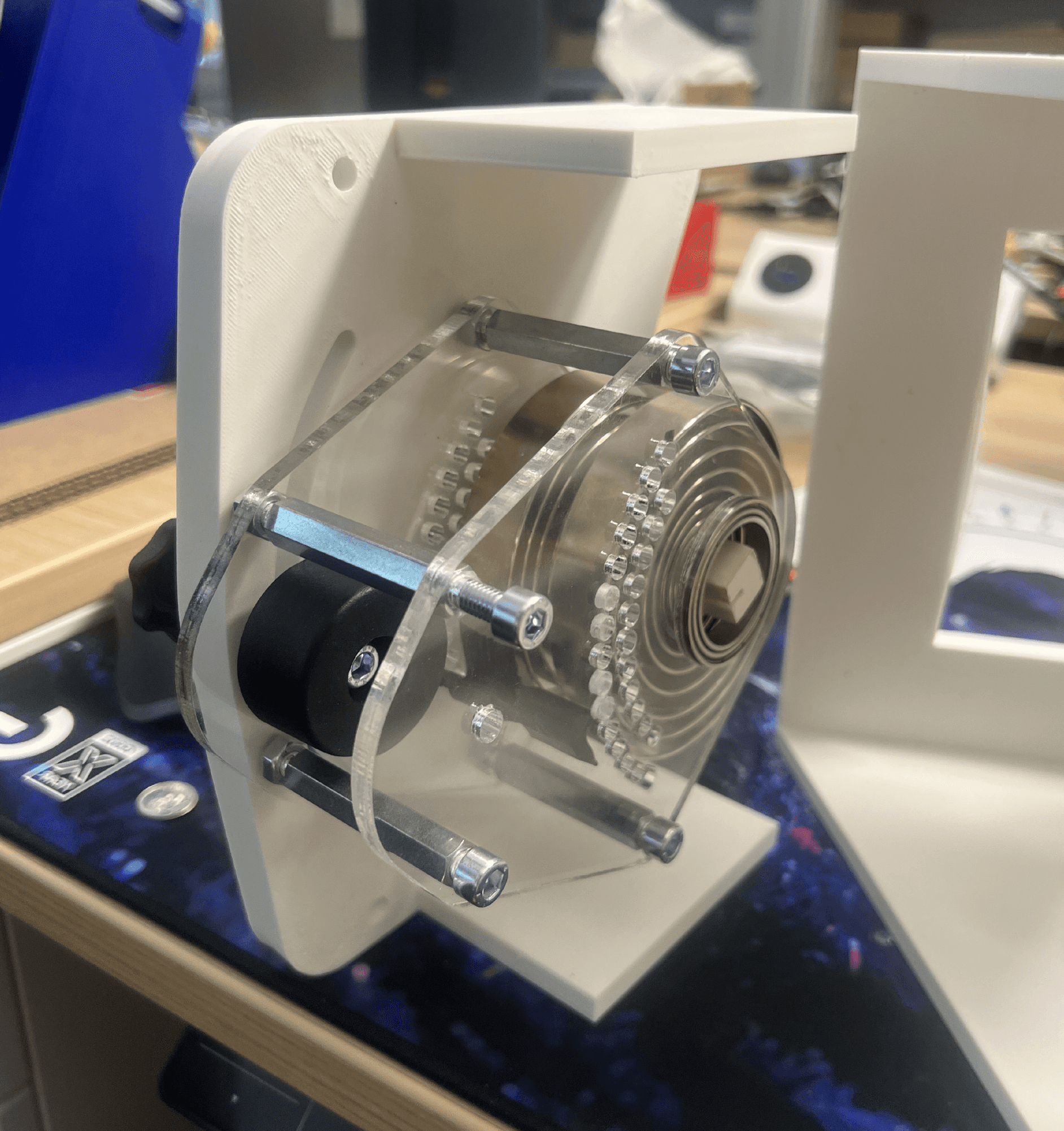
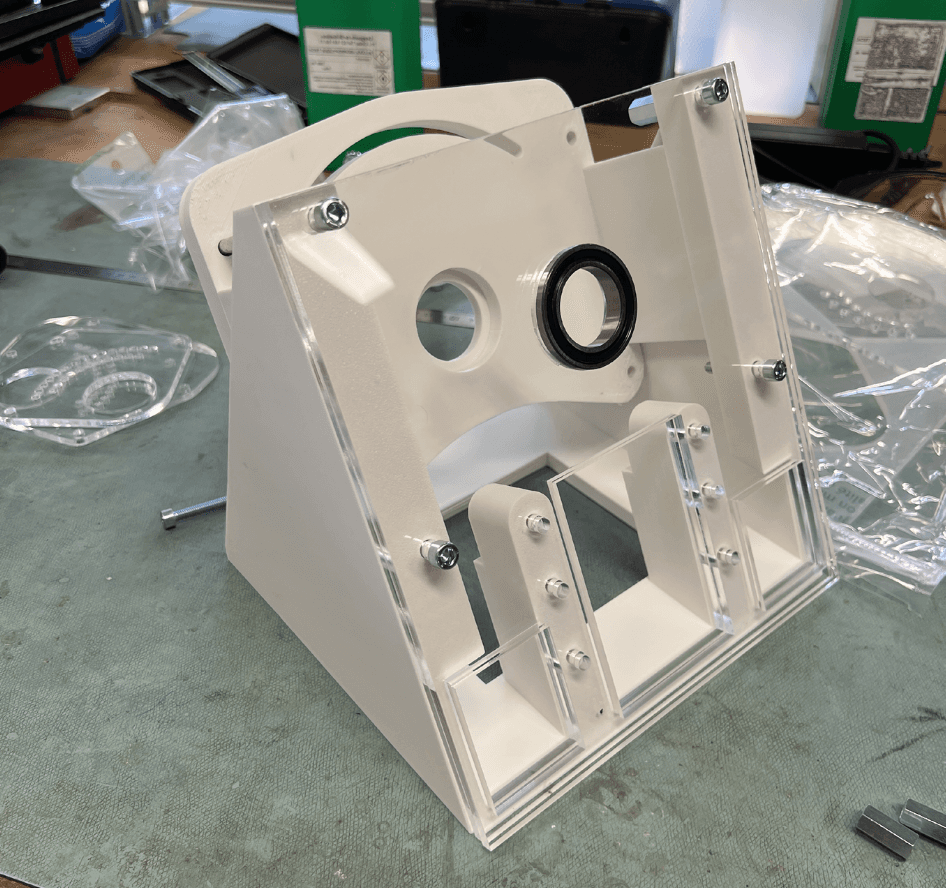
The final spring pre-tensioning mechanism was installed, with a track included to recalibrate the center position if needed. In the end, both the initial tension of the steering and the center point could be adjusted, allowing for lots of tuning.
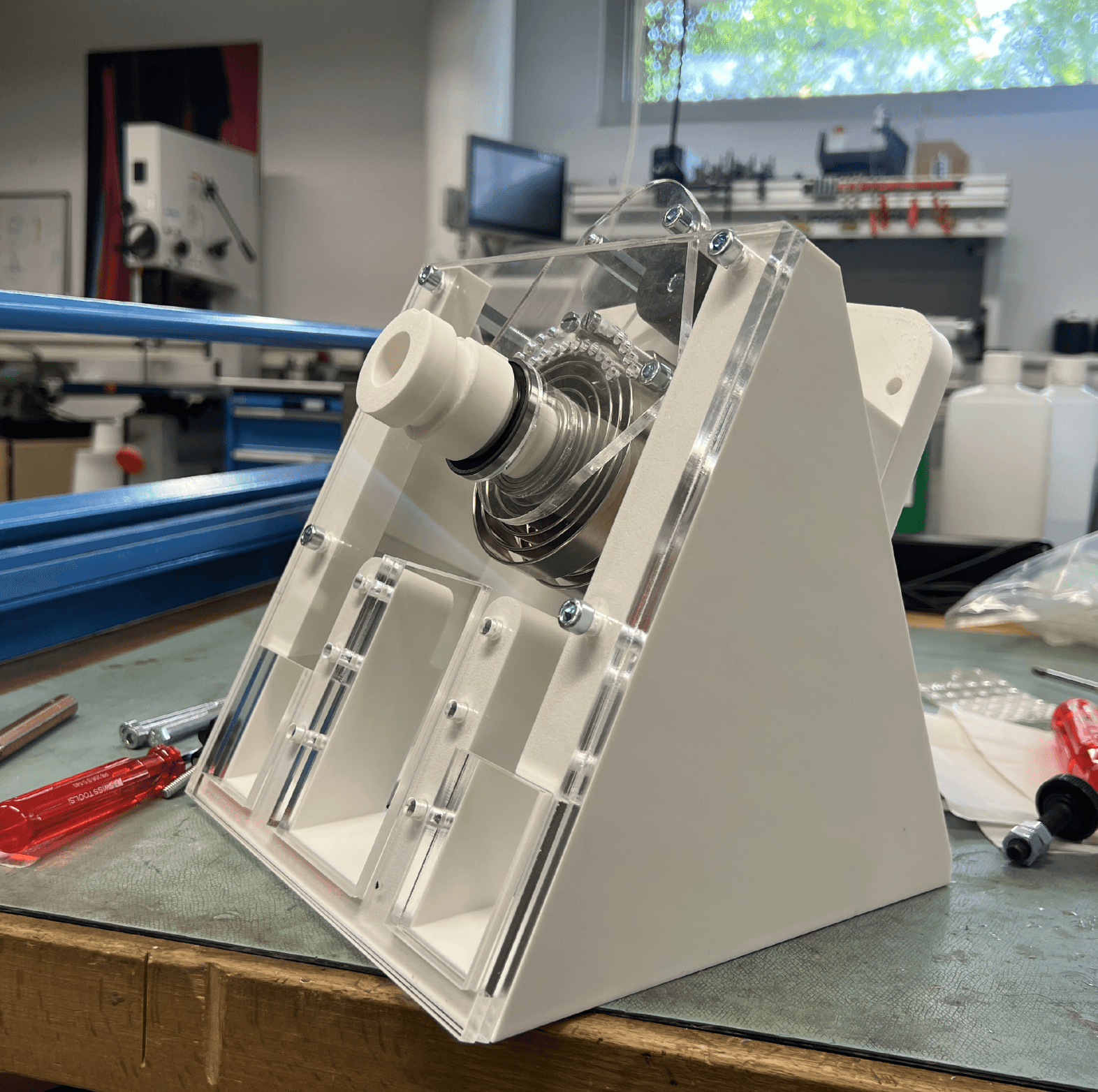
From there, the main testing platform was assembled, consisting of two 3D-printed frame elements, laser cut acrylic sheets, standard hardware, and some ball bearings.
Hydraulic damper
After completing the initial torsion spring prototype, a consistent problem came up: the wheel would oscillate/bounce when released, taking a while to come to rest. All prototypes had this issue, and it needed to be resolved. After some initial testing with magnetic damping (trying to use eddy currents), I realized that it wouldn't be a cost-effective approach.
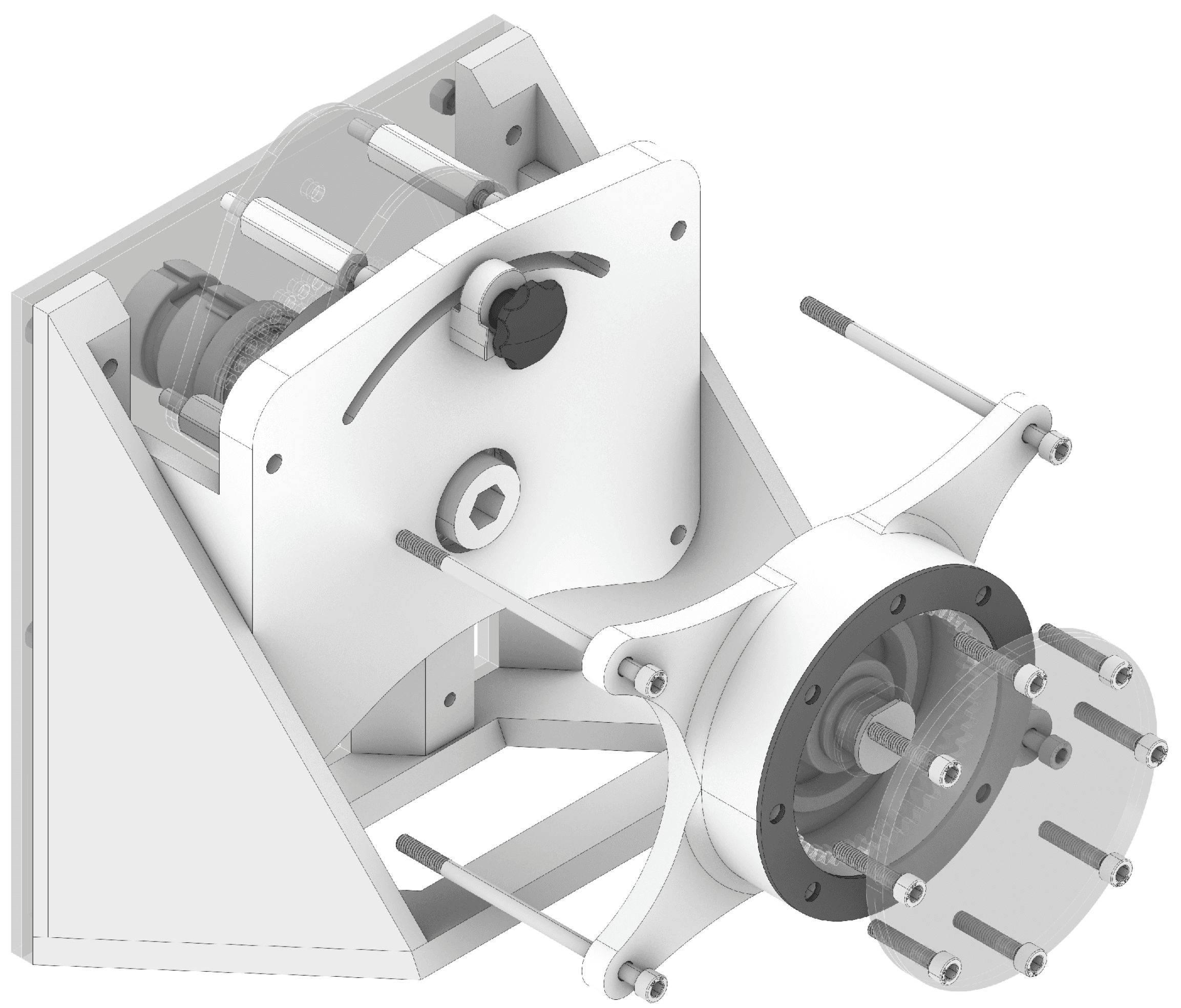
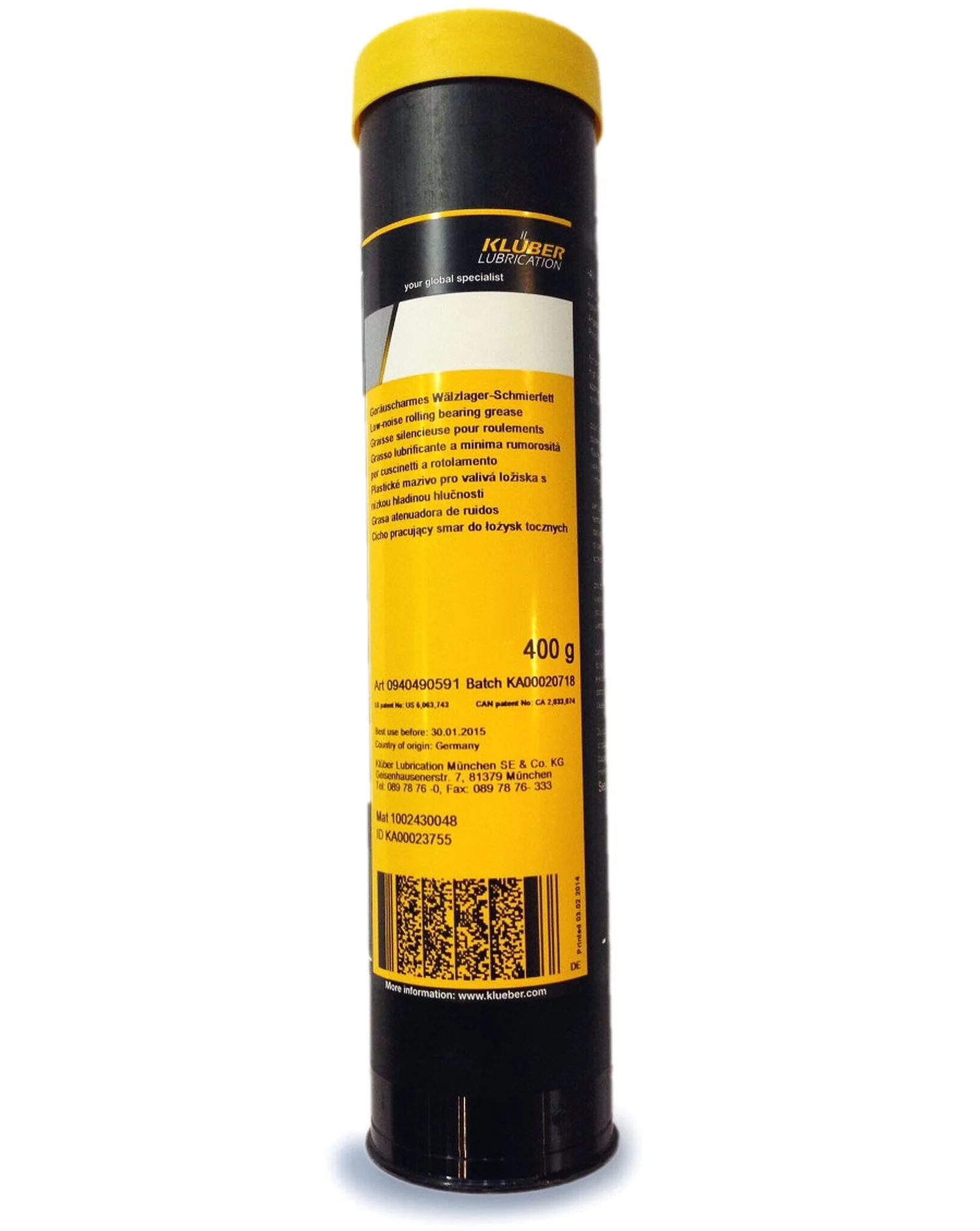
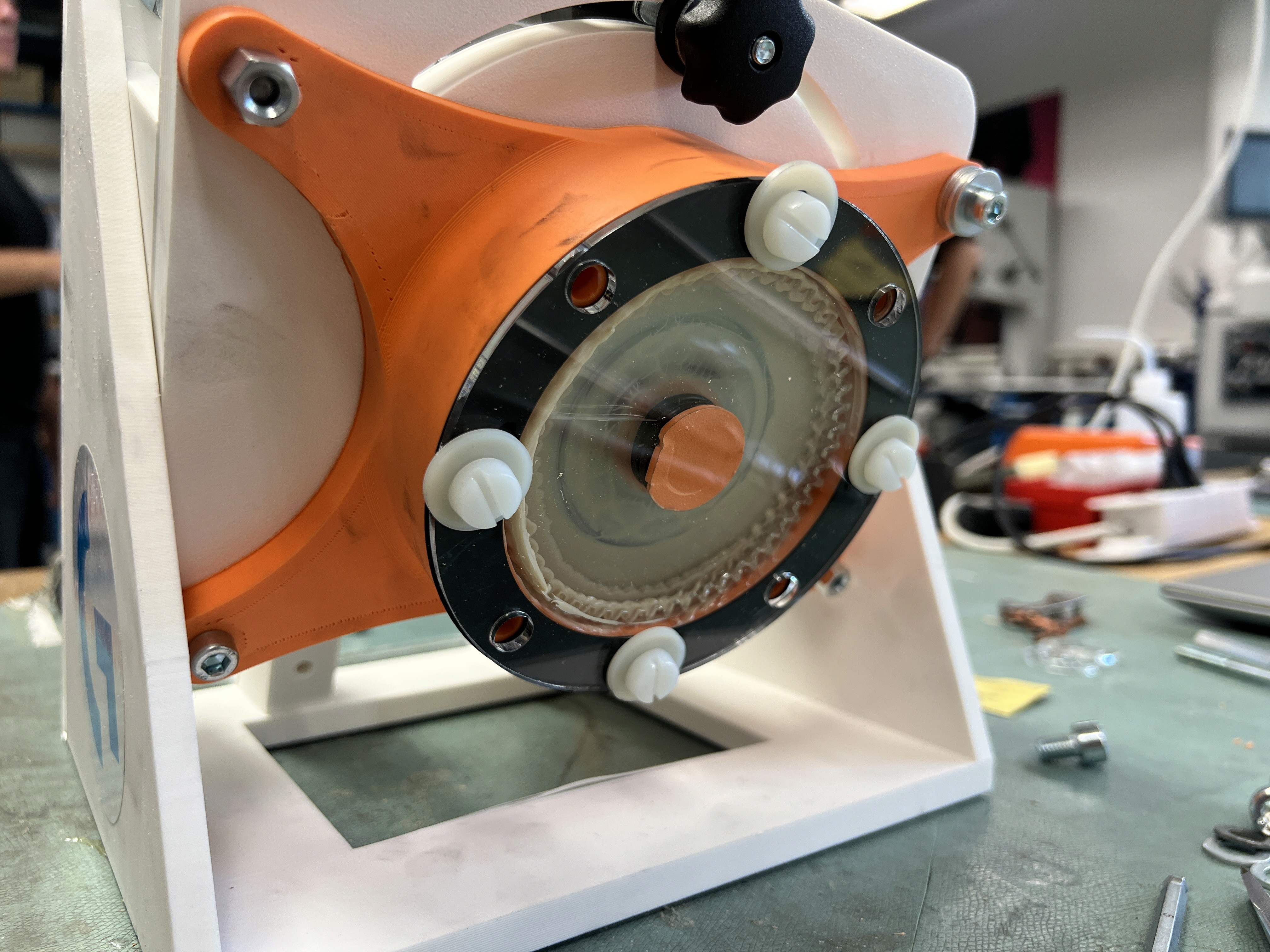
Instead, I decided to use damping grease to create a hydraulic damper; maximizing friction via differential-like gears. Thanks to my modular testing platform, I was able to add this onto my existing prototype without difficulty.
Results
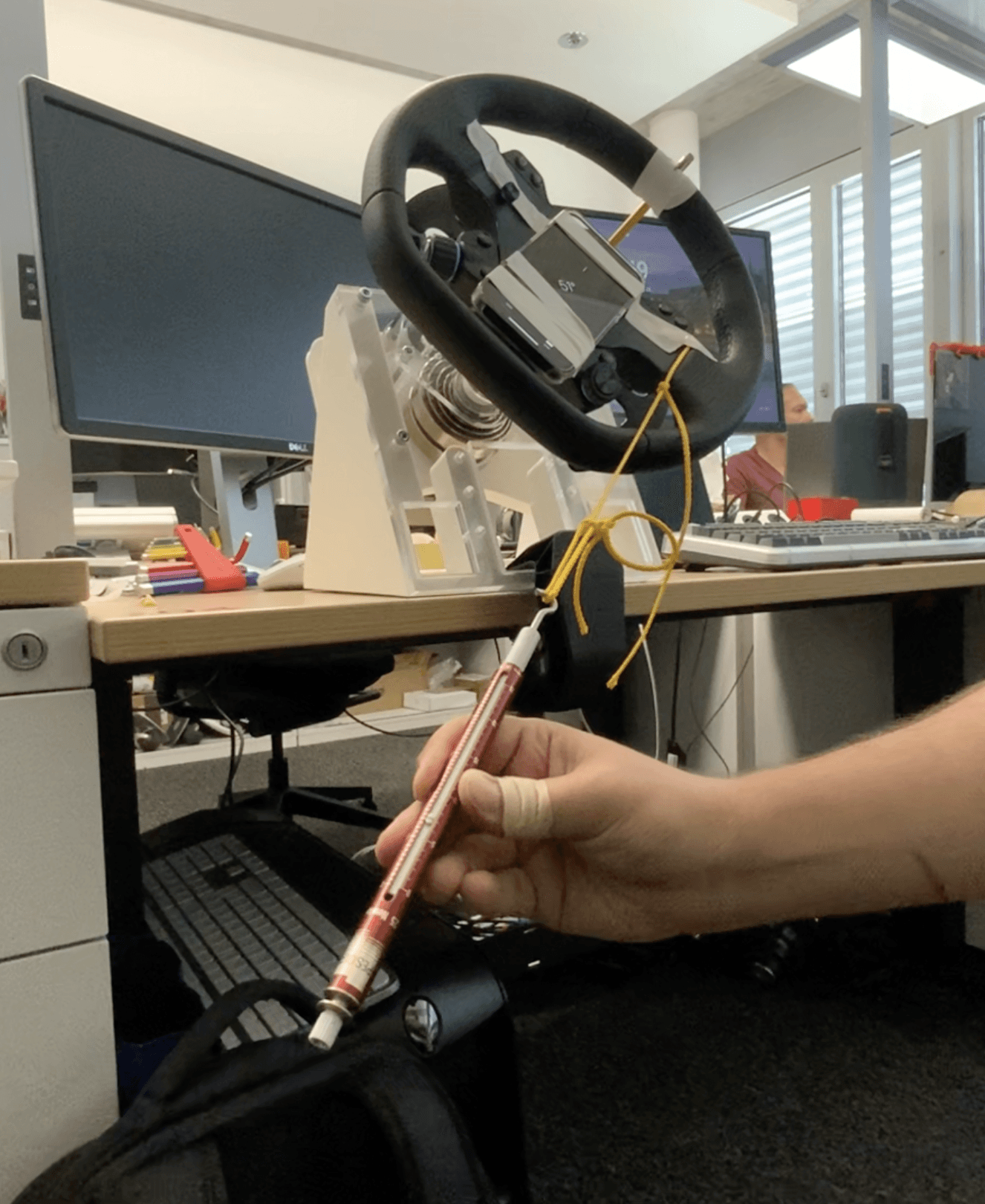
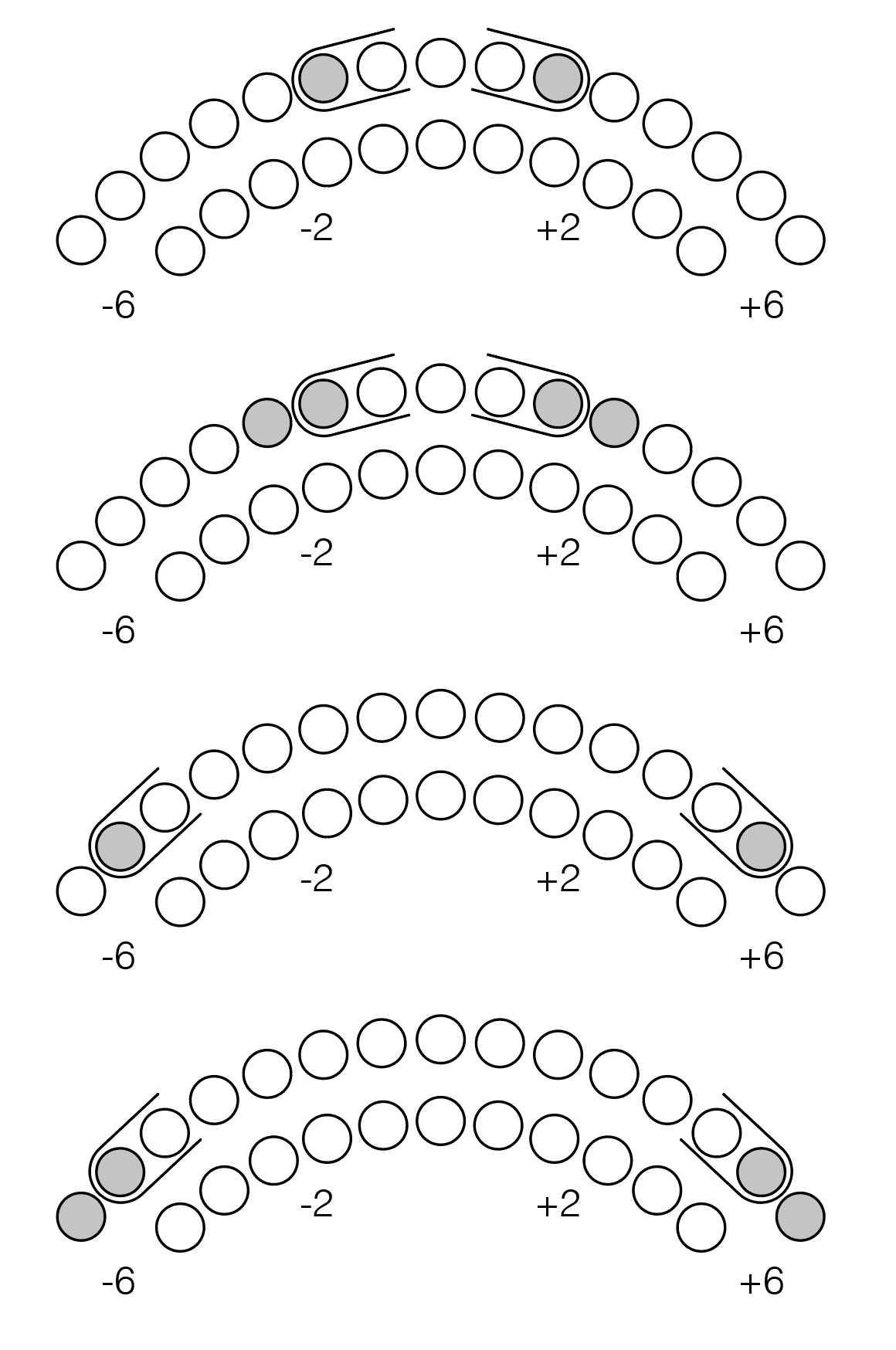
Five tensioning configurations were tested, with torque measurements taken at 15 degree increments from 0 to 90 degrees. For each configuration, measurements were taken on the way up, and on the way down.
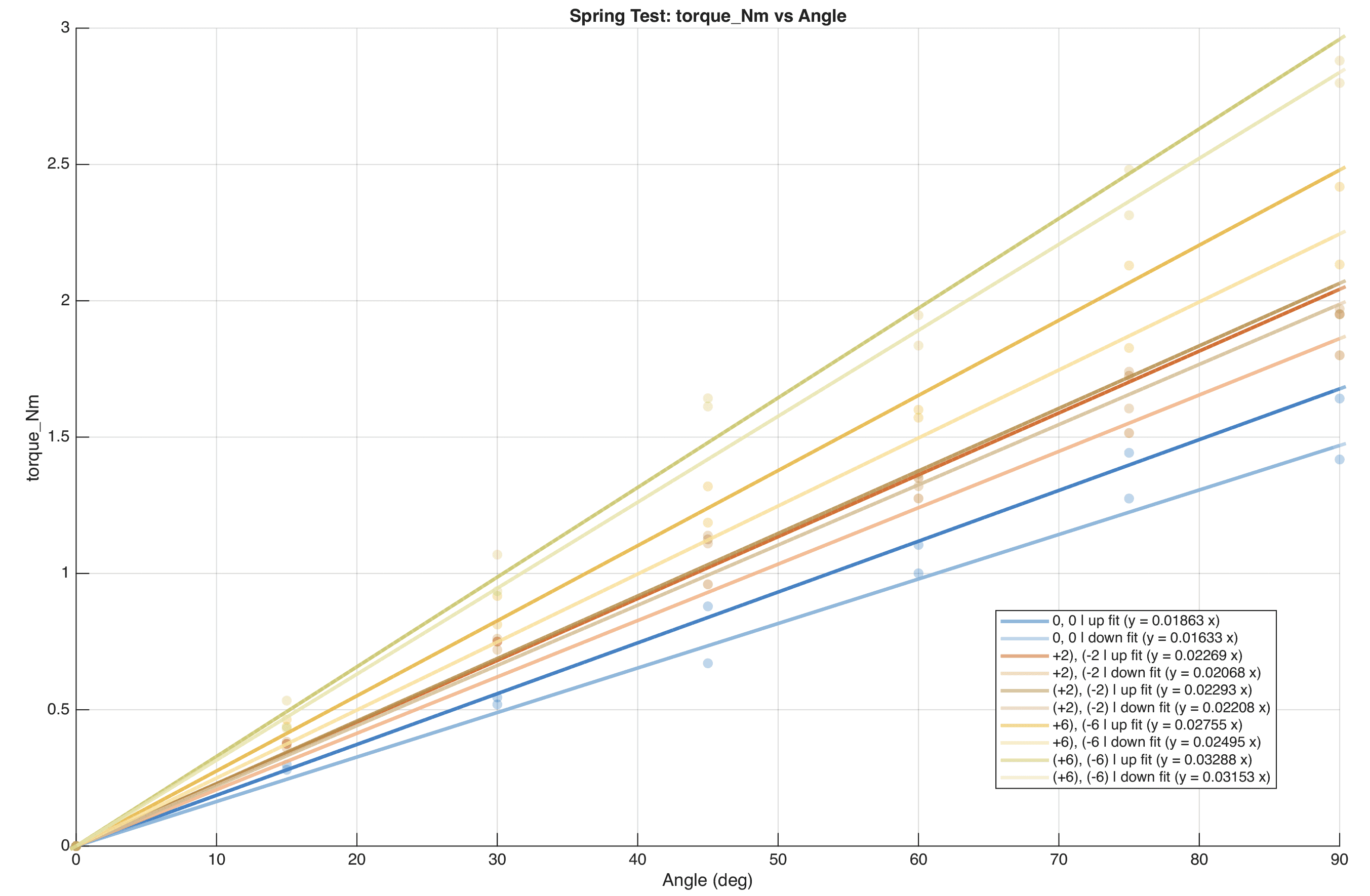
The final results were great: the torsion springs had linear torque vs. angle response, especially when compared to the other spring prototypes that had been created.
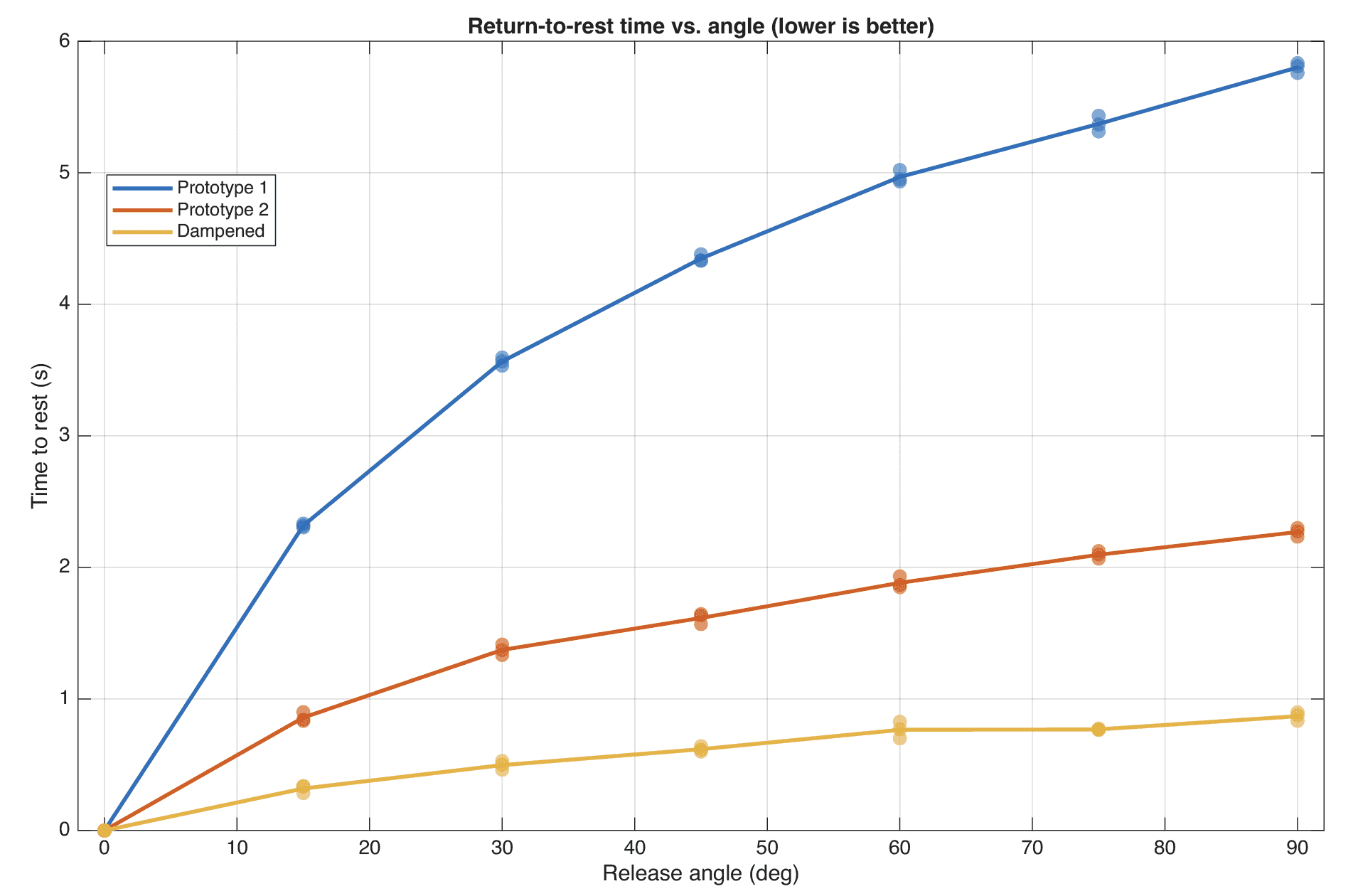
The dampened prototype vastly reduced the time the steering wheel took to come to rest.
The final damping result was promising enough to ship the prototype to Taiwan for further review and development.